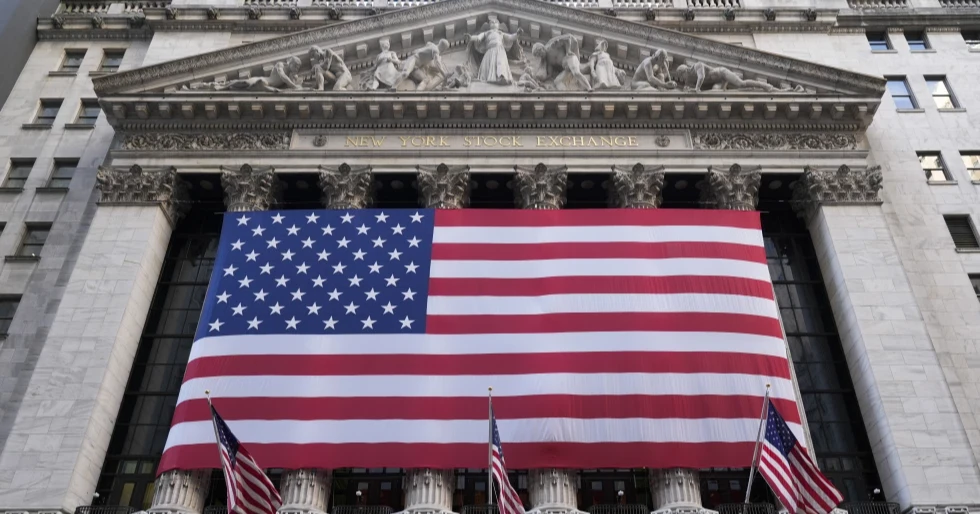
Asian stock markets mostly declined on Friday, with Tokyo's benchmark falling by more than 2% following a sell-off on Wall Street.
U.S. futures and oil prices saw an uptick, reports AP.
Bitcoin was trading around $88,266, dropping 3.4% according to CoinDesk, after President Donald Trump signed an executive order on Thursday to establish a government bitcoin reserve, marking a significant step in the cryptocurrency's potential mainstream acceptance.
China's trade declines in Jan-Feb amid uncertainty
China's exports and imports for January-February were below expectations, with exports rising just 2.3% and imports dropping 8.4%. These figures typically account for distortions caused by the Lunar New Year holidays.
U.S. stocks fell after President Trump granted another temporary delay to his 25% tariffs on goods imported from Mexico and Canada, highlighting the uncertainty these tariffs have created for the global economy. Investors showed less enthusiasm compared to the previous day's rally when Trump offered a one-month exemption for automakers.
In Tokyo, the Nikkei 225 dropped 2.2% to 36,887.17 due to heavy selling in tech stocks. Shares of Tokyo Electron, a chipmaker, fell 3.1%, while testing equipment maker Advantest dropped 2.3%. Both saw sharp declines in their U.S.-listed stocks overnight.
Hong Kong's Hang Seng index reversed early gains, falling 0.7% to 24,204.97, while the Shanghai Composite index dropped 0.3% to 3,372.55.
In Australia, the S&P/ASX 200 fell 1.8% to 7,948.20, and South Korea's Kospi dropped 0.5% to 2,563.48 after a court ordered the release of impeached President Yoon Suk Yeol, who had been in jail since his arrest over a short-lived martial law declaration.
Taiwan’s Taiex declined by 0.6%.
India's Sensex remained nearly unchanged, while Bangkok’s SET index rose by 0.3%.
On Thursday, U.S. stocks saw significant losses, with the S&P 500 falling 1.8% to 5,738.52, resuming its decline after a brief recovery from previous weeks. The Dow Jones Industrial Average dropped 1% to 42,579.08, and the Nasdaq composite fell 2.6% to 18,069.26, finishing more than 10% below its December record.
Stock markets have been buoyed by hopes that Trump may be using tariffs as a negotiating strategy rather than a permanent policy, potentially avoiding a full-blown trade war. However, Trump is still pushing forward with other tariffs due to take effect on April 2, and the ongoing uncertainty surrounding these moves is amplifying concerns. U.S. businesses have reported "chaos" due to the confusion, while households brace for rising inflation.
China’s foreign minister criticizes US tariffs and accuses the country of ‘meeting good with evil’
Next up for Wall Street is a report from the U.S. Labor Department on Friday detailing how many workers were hired last month. So far, a solid job market and strong consumer spending have helped prevent a recession, with economists predicting a rise in hiring for February.
Semiconductor companies and their suppliers, which had soared due to the artificial intelligence boom, led the losses. Nvidia dropped 5.7%, and Broadcom fell 6.3% ahead of its earnings report.
In other markets, U.S. benchmark crude oil rose by 44 cents to $66.80 per barrel, while Brent crude, the international standard, gained 47 cents to $69.93 per barrel.
The U.S. dollar weakened to 147.54 yen from 147.98 yen. Rising labor costs in Japan have led to expectations that the Bank of Japan may raise its interest rate soon to tackle rising inflation.
Marcel Thieliant of Capital Economics noted that Japan's trade unions are requesting a larger pay hike this year compared to last year’s spring wage negotiations, and he expects employers to comply.
The euro rose to $1.0841 from $1.0786 after the European Central Bank cut interest rates on Thursday as expected.