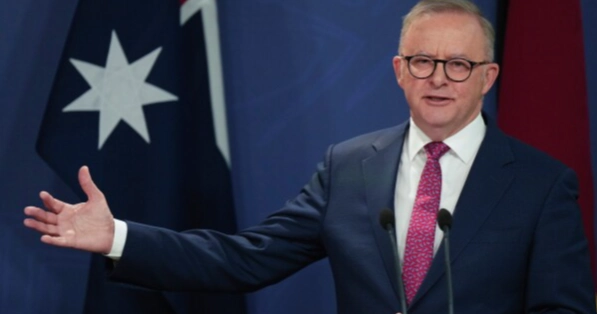
Prime Minister Anthony Albanese has urged China to allow the import of Australian iron ore without barriers following reports that a state-run Chinese company has asked steelmakers and traders to suspend purchases from mining giant BHP.
According to media reports, China Mineral Resources Group Co. directed domestic buyers to temporarily stop buying dollar-denominated seaborne shipments from BHP, escalating a dispute over contract negotiations.
Albanese said he was concerned by the reports, stressing that iron ore exports are vital to both economies.
“I want Australian iron ore to be exported into China without hindrance. It makes a major contribution to China’s economy, as well as to Australia’s,” he told reporters.
He described the measures as “disappointing,” adding, “Sometimes when people negotiate over price, these things occur. But I want to see this resolved quickly.”
The suspension means new deals cannot be signed, even for shipments already sent from BHP’s mines in Australia. The Chinese company, created to strengthen Beijing’s influence in the global iron ore market, did not comment.
BHP also declined to comment on the negotiations.
Treasurer Jim Chalmers said he plans to meet BHP chief executive Mike Henry regarding the issue. “These are concerning reports, but ultimately they involve commercial arrangements between companies. Still, our government will continue to advocate for Australia’s interests and work through these matters calmly,” he said.
North Korean, Chinese foreign ministers vow to deepen ties, resist hegemonism
Since Albanese’s government took office in 2022, China has lifted a number of trade barriers worth up to 20 billion Australian dollars ($13 billion) annually. Iron ore, however, had previously been spared because of its importance to Chinese steelmakers.
Analyst Kaan Peker from RBC Capital Markets noted that China cannot easily stop buying BHP ore without drastically cutting steel output. He said global suppliers, including Brazil’s Vale, Australia’s Fortescue, and Rio Tinto, are already producing at full capacity.
“It seems more like a negotiation tactic, possibly aimed at securing lower prices,” Peker said.
Source: AP