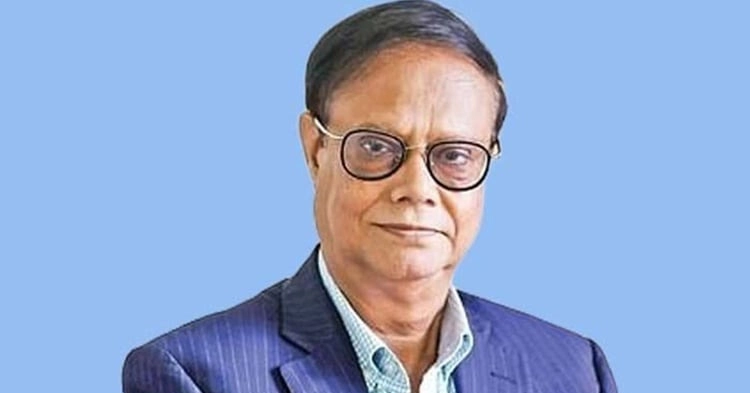
The newly formed government will continue the ongoing reform programme in the banking sector, with priority given to controlling inflation, reducing non-performing loans and ensuring stability of the merged banks, Bangladesh Bank Governor Ahsan H Mansur said on Monday.
He made the remarks while speaking to reporters after a closed-door meeting with Finance Minister Amir Khosru Mahmud Chowdhury at the minister’s office in the Secretariat.
The governor said the meeting focused on reviewing the progress of various reform initiatives undertaken by the central bank in recent months.
“We briefed the finance minister on the reforms we are implementing. He has emphasised continuing these measures and expressed strong support. His response was very positive,” Mansur said.
Responding to questions, the governor said controlling inflation remains one of the government’s top priorities.
“Inflation must be brought down — there is no disagreement on this,” he said.
He said the central bank is working to reduce inflation through tighter monetary policy, better liquidity management and coordinated interest rate measures. Efforts are underway to control excess liquidity in the market and ensure that monetary policy remains aligned with inflation control objectives.
The issue of rising non-performing loans was also discussed at the meeting, with the central bank taking stricter measures to address the problem.
Mansur said legal actions against large defaulters are being strengthened, while loan restructuring policies have been tightened. Authorities are also identifying wilful defaulters and enhancing transparency in the loan classification process.
“We are holding regular discussions with bankers. Many believe the steps taken are beginning to produce results,” he said.
At the same time, he added, the central bank is ensuring that credit flow to productive sectors continues to support economic activity.
Bangladesh’s forex reserves surge past $34 billion driven by remittance boom
The stability of the five banks merged to form the consolidated Islami bank was also discussed during the meeting.
The governor said ensuring stability of the merged institution is now a key priority, noting that the deposit situation has been gradually improving.
“Depositors are receiving their funds, and new deposits are also coming in,” he said.
He added that the process of appointing a new managing director had been delayed after a potential candidate fell ill. Until a new appointment is made, the administrator and board will continue overseeing reform measures. Extending the board’s tenure, if necessary, is also under consideration.
The five banks — EXIM Bank, Social Islami Bank, First Security Islami Bank, Global Islami Bank and Union Bank — were merged to form the consolidated Islami bank. The bank has an authorised capital of Tk 400 billion and a paid-up capital of Tk 350 billion, of which the government has contributed Tk 200 billion.
Bangladesh’s financial sector has faced widespread allegations of irregularities and corruption in recent years, particularly involving loan scams, capital flight, politically influenced lending and weak regulatory oversight.
Following the political transition in August 2024, the interim government initiated a series of reforms to restore discipline in the financial sector. These included bank mergers, restructuring of bank boards, enhanced regulatory oversight, legal action against major defaulters and liquidity support measures.
However, many of the reforms remain ongoing due to the limited timeframe of the interim administration.
Officials said the responsibility for fully implementing these reforms and restoring stability and public confidence in the banking system now rests with the new government.
Bangladesh Bank officials said key reform priorities include strengthening governance, reducing capital shortfalls, improving risk management, lowering defaulted loans and enhancing supervision across the banking sector.