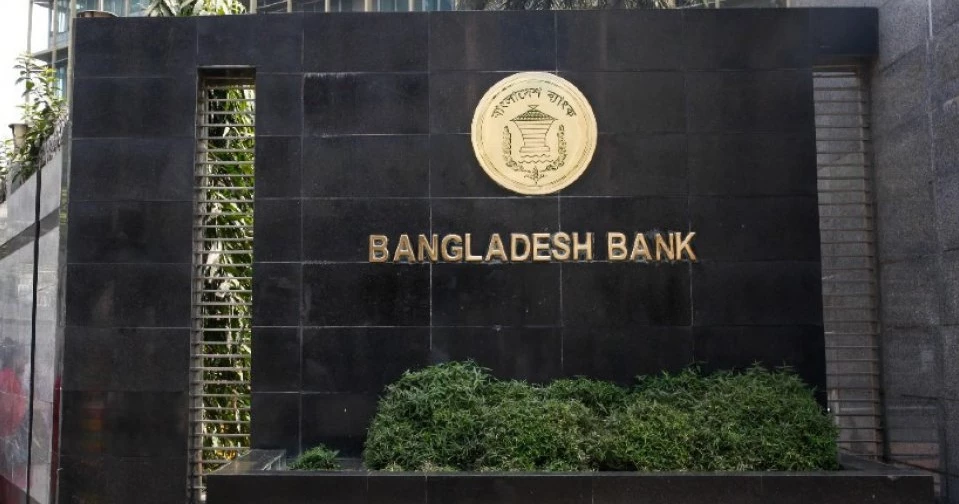
A move by the central bank to limit shareholding for individuals, families, and institutions has met with fierce opposition from the Bangladesh Association of Banks (BAB), an organization of bank owners, sparking a debate over the future of corporate governance in Bangladesh's financial sector.
Under the draft Bank Company (Amendment) Act 2025, Bangladesh Bank has proposed that no person, family, or institution may directly or indirectly hold more than a 5 percent stake in more than one bank simultaneously.
The Financial Institutions Division (FID) of the Ministry of Finance held a meeting last week, chaired by FID Secretary Nazma Mobarek, to discuss the addition of three new sub-sections to Section 14/B of the law. The primary objective is to prevent vested interest groups from exerting undue influence over multiple financial institutions at once.
Three legislative changes are proposed to achieve the desired result:
If a person or entity owns 2 percent or more of one bank, they cannot hold a similar 2 percent stake in any other bank.
Even if an investor holds more than 5 percent of a bank's shares, their voting rights will be capped at 5 percent (excluding the government and non-profit/strategic investors).
Current regulations allow an investor to hold up to 10 percent of a bank’s shares with "one share, one vote" rights, and there are no restrictions on holding shares in multiple banks.
The Bangladesh Association of Banks (BAB), representing private bank owners, has strongly opposed the move. BAB representatives argued that general shareholders do not influence policy; rather, the Board of Directors does. They contend that since there are already proposals to reduce the number of family members on boards, further limits on shareholding are unnecessary and "excessively strict."
BAB further proposed that the definition of a "family" be limited to spouses and dependent members, and that the maximum family shareholding limit be increased to 25 percent.
Conversely, Bangladesh Bank officials highlighted the recent devastation caused by a single large conglomerate that gained majority control over six banks. Central bank representatives stated that this group manipulated policies to loot thousands of crores of taka, leaving hundreds of thousands of depositors in jeopardy.
"The government had to inject Tk 20,000 crore of public money at the end of last year to compensate depositors of five merged private banks," officials noted during the meeting.
FID Secretary Nazma Mobarek stated that more time is needed to finalize the amendments due to the significant differences in opinion between the central bank and the BAB.
"We have asked the central bank officials and BAB representatives to reach a consensus before the next meeting," the Secretary said.