
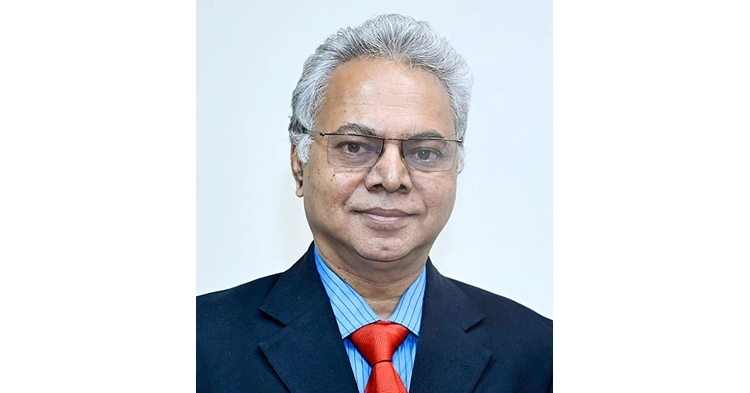
Highlighting the critical role of Islamic finance in the national economy, Dr. Md. Ezazul Islam, Director General of the Bangladesh Institute of Bank Management (BIBM), emphasized that Shariah governance in Islamic banks is not merely a formal requirement but a foundation for trust, accountability, and long-term sustainability.
Speaking as the chair at a seminar titled "Shariah Governance in Islamic Banks of Bangladesh: An Evaluation" on Monday, Dr. Islam noted that while Islamic banking has become a vital part of the country’s financial landscape, there have been noticeable lapses in the required standards of Shariah compliance.
The seminar was jointly organized by BIBM and INCEIF University, Malaysia, at the BIBM auditorium in Mirpur.
Dr. Islam stressed that the current challenge is ensuring that Shariah frameworks function effectively in practice rather than just existing on paper. He called for comprehensive reforms, including:
Formation of independent and skilled Boards of Directors, Integration of Shariah governance with broader corporate governance, Implementation of the "Three Lines of Defence" model for effective compliance and ensuring the independence of internal Shariah audits and introducing external Shariah reviews and fiduciary ratings.
"BIBM is committed to advancing this process through research, dialogue, and training," Dr. Islam said, adding that a coordinated effort is needed between regulators, banks, Shariah experts, and top management to foster a culture of actual effectiveness over mere formality.
Mosleh Uddin Ahmed, Managing Director of Shahjalal Islami Bank, underscored the need for better loss and risk management. He pointed out that many customers still lack a clear understanding of Islamic banking principles, necessitating more transparent communication regarding its processes and benefits.
Abdul Awal Sarker, former Executive Director of Bangladesh Bank and Director of Janata Bank, raised concerns regarding information asymmetry.
He alleged that information is often concealed during the investment (loan) process, leading to a high rate of defaults.
"Ethics and personal integrity are the backbones of Islamic banking. If those involved are not honest, Shariah compliance will inevitably falter," Sarker remarked.
He proposed the appointment of "Resident Shariah Scholars" in every Islamic bank to ensure daily oversight and called for stricter monitoring by the central bank.
BIBM gets new director general in Dr. Ezazul Islam
Nabil Ahmed, Executive Director of the Financial Reporting Council (FRC), identified the poor quality of internal audit reports in several Shariah-based banks as a major institutional weakness. He emphasized that standardized and regular auditing is essential for maintaining transparency and accountability.
The seminar also featured insights from Dr. Said Bouheraoua, Director of the ISRA Institute, Malaysia; Muhammad Anisur Rahman, Director of the Islamic Banking Regulations and Policy Department at Bangladesh Bank; and Dr. Md. Mahabbat Hossain,
Associate Professor at BIBM, who presented the keynote paper.