
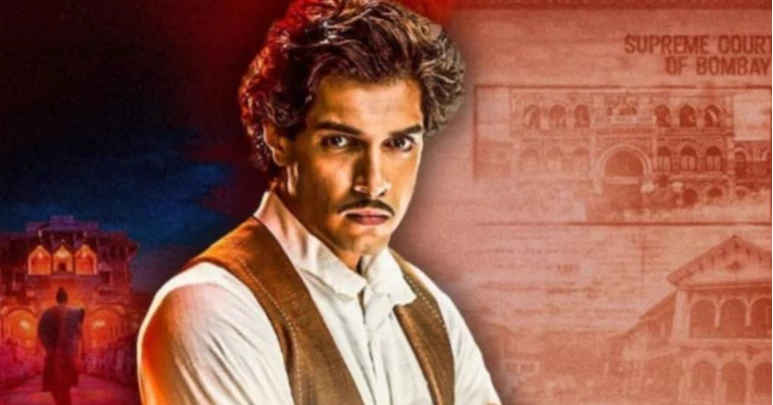
As Junaid Khan marks one year since his debut in Maharaj, many in Bollywood are rethinking what a "star kid" launch should look like. In an industry often critiqued for favouring legacy over merit, Aamir Khan’s son has quietly — and perhaps unintentionally — become the face of a very different narrative.
When Maharaj premiered on Netflix on June 21, 2024, it was far removed from the conventional Bollywood debut template for celebrity children — no romantic fantasy, no glamorous co-star, no elaborate promotional blitz. Instead, Junaid stepped into the spotlight through a serious period drama, set in 1862 colonial Bombay, where he portrayed Karsandas Mulji, a reformist journalist battling religious exploitation in court.
The film, based on a real-life libel case, focused on his character’s mission to expose a powerful religious figure, portrayed by Jaideep Ahlawat, who was accused of sexually exploiting his followers under the guise of spiritual authority. The narrative concluded in a dramatic courtroom showdown, where Junaid’s character emerged triumphant — a reflection, perhaps, of the real-life legal controversy the film faced.
Tere Naam look inspired by former president: Salman Khan
OTT Debut, Not a Theatrical Blitz
For someone carrying the weight of being Aamir Khan’s son, expectations were high for a high-profile, theatrical launch. Instead, Maharaj quietly debuted on an OTT platform after a delayed release due to legal action from a religious group. The Gujarat High Court had initially stayed the release, citing concerns from a Vaishnavite sect who feared the film could hurt religious sentiments. The stay was eventually lifted, and the film was released on Netflix with little fanfare.
This unflashy launch — marked by minimal marketing and no red carpets — stood in stark contrast to the spectacle typically reserved for Bollywood’s new-generation elite.
Simplicity Over Stardom
In keeping with the tone of his debut, Junaid Khan’s off-screen personality has also surprised many. Often spotted taking public transport or walking around Mumbai in casual clothing, Junaid has become a rare example of a star kid who chooses practicality over privilege.
In interviews, he’s said there’s no grand philosophy behind his lifestyle — just a preference for efficiency in a city plagued by traffic. But in an era when star children often flaunt luxury, Junaid’s modesty stands out as refreshing.
A recent incident at the premiere of Sitaare Zameen Par further highlighted this: Junaid was turned away by Salman Khan’s security guard who didn’t recognise him — an incident symbolic of how unassuming his public presence is, despite his lineage.
BTS’ RM admits feeling jealous of great music, finds peace in art
Content Over Controversy
Despite early hurdles and a delayed release, Maharaj received a warm response for both its subject and Junaid’s restrained, committed performance. With no marketing blitz or studio hype, the film quietly proved that compelling content can still rise above background noise.
India’s nepotism debate has long revolved around who sustains success after being given a head-start. But Junaid Khan’s journey so far suggests something different: that privilege doesn’t always have to be exploited. It can be wielded with grace — or even quietly ignored.
As Maharaj turns one, Junaid Khan continues to be an unlikely figure in the nepotism discourse — a star kid by birth, but not by behaviour. And that, perhaps, is what makes him Bollywood’s most "non-nepo" nepo kid.
Source: With inputs from NDTV