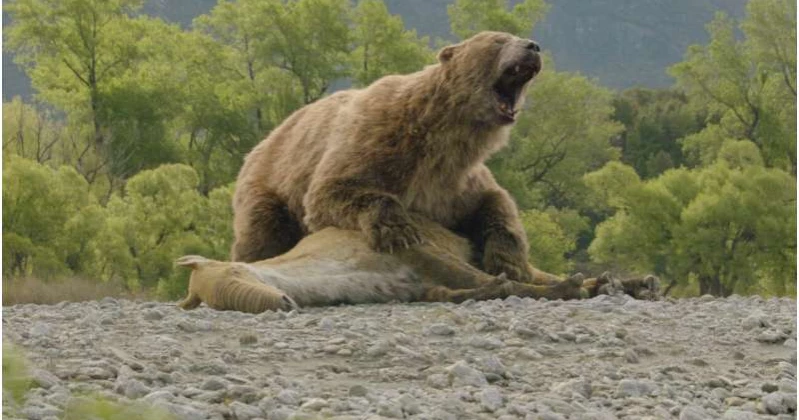
Forget what you know from Disney’s “Ice Age” movies — the real Ice Age was a world of massive upheaval and bizarre, sometimes terrifying creatures, from carnivorous kangaroos to 14-foot-tall bears and armadillos larger than cars. Even Sid the sloth would be stunned.
Apple TV’s five-part “Prehistoric Planet: Ice Age” brings the Pleistocene era vividly to life, millions of years after the dinosaurs’ extinction, with hyper-realistic computer-generated imagery. “No one has depicted these animals interacting in this way before,” says Mike Gunton, co-executive producer and senior executive at the BBC Natural History Unit.
The series blends cinematic storytelling with scientific accuracy. From flaring nostrils to wind-tossed fur and twitching eyelashes, the show aims for viewers to marvel at the creatures as if they were real. “I want people to wonder, ‘Where was this filmed?’” Gunton adds.
Ethiopia’s long-dormant Hayli Gubbi volcano eruption subsides
Unlike a single Ice Age, the show explores eight ice ages, where a quarter of Earth was frozen while the rest became arid, shaping evolution. Among the fascinating animals are Diprotodons, rhino-sized wombat relatives; giant short-faced kangaroos; 14-foot-tall bears; and the dwarf Stegodon — a three-foot-tall elephant. The series even introduces a 12-inch baby Stegodon playing with a butterfly, only to face a gang of six-foot storks, rescued by its mother.
Narrated by Tom Hiddleston with a score by Hans Zimmer, Anže Rozman and Kara Talve, the series is co-executive produced by Jon Favreau, who drew on his experience with “The Jungle Book” and “The Lion King” to achieve photorealism in both animals and environments.
The production relied on Framestore visual effects, consulted over 50 Ice Age experts, and used puppets to perfect shots before adding CGI. Fossils preserved in permafrost offered unprecedented reference for recreating the animals.
“Prehistoric Planet: Ice Age” showcases animals’ relationships, behaviors, and survival strategies rather than endless predator-prey chases. “Audiences are drawn to the complexity of interactions, not just the kills,” Gunton explains.
From woolly mammoths braving blizzards to dwarf elephants dodging giant birds, the series captures a dynamic era of transition, offering viewers a vivid, scientifically grounded glimpse of a world long gone.
Source: AP