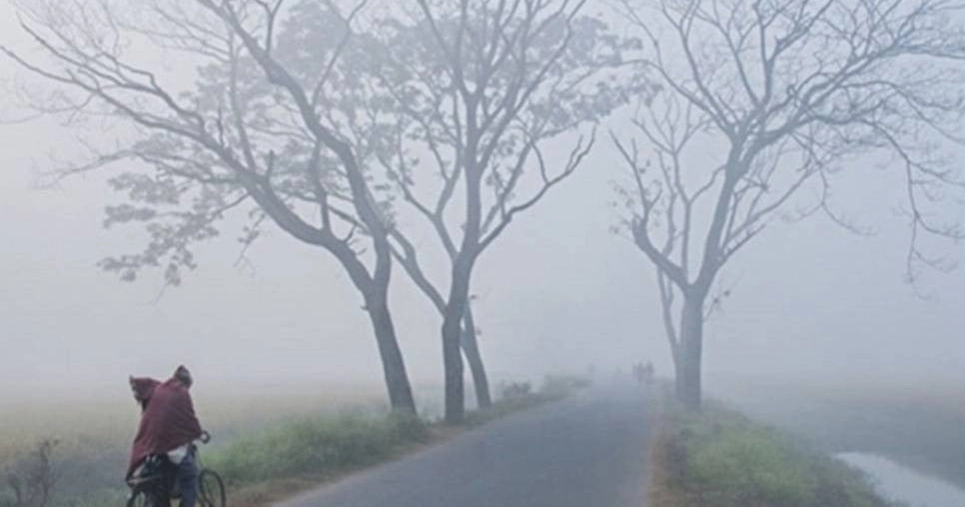
A severe cold wave swept parts of Bangladesh on the last day of the year, disrupting normal life and causing hardship.
According to Bangladesh Meteorological Department (BMD,) Gopalganj recorded 7.5 degrees Celsius at 6 am on Wednesday, marking the lowest temperature this season.
A mild to moderate cold wave is affecting Khulna and Barishal divisions as well as Madaripur, Gopalganj, Rajshahi, Pabna, and Sirajganj districts.
Weather is expected to remain dry with temporary partly cloudy sky in most areas.
Moderate to dense fog may occur in many parts of the country from midnight to morning, potentially continuing until noon, which could temporarily disrupt air navigation, inland river transport, and road communication, said a Met office bulletin.
Night temperatures are likely to remain steady, while daytime temperatures may rise slightly though foggy condition will sustain the cold feeling.
In Gopalganj, dense fog and the prolonged cold spell have brought daily activities to a near halt, especially in Kotalipara upazila.
For the past five days, thick fog has blocked sunlight, forcing day labourers stary indoors and delaying farm work.
Farmers have raised concerns that the cold is affecting Boro paddy cultivation in low-lying, single-crop farmlands.
Abu Sufian, an observer at Gopalganj Meteorological Office, said morning humidity reached 97 percent, intensifying the chill.
Though temperatures eased slightly after noon, the cold has hit low-income groups the hardest. Daily wage earners struggle to survive outdoors, livestock and poultry are affected, and children and the elderly are increasingly falling ill, he added.
Many van pullers and labourers were seen lighting small roadside fires to stay warm.
Van driver Shukur Ali, 50, said, “Even in this bitter cold, I have come out with my van to earn a living. But there are no passengers. People are staying home unless absolutely necessary.”
Kotalipara Upazila Health and Family Planning Officer Kumar Mridul Das said cases of diarrhoea, pneumonia, coughs, breathing difficulties, and fever have increased, particularly among children and the elderly.
“Patient pressure has increased at health centres while limited manpower is making it difficult to provide services,” he added.
In Rajshahi, the mercury dropped to 8.4 degrees Celsius at 6 am on Wednesday, the season’s lowest in the district.
Rajib Khan, an observer at Rajshahi Meteorological Office, said icy northern winds intensified from Tuesday evening and may continue for several days.
The city experienced three consecutive days without sunshine, worsening the cold amid dense fog.
Labourers and homeless people were seen burning straw and other materials to stay warm while cold-related illnesses surged at Rajshahi Medical College Hospital.
Sylhet residents also felt the winter chill, with temperatures falling to around 12 degrees Celsius.
Dense fog blanketed the city, keeping the sun hidden until noon.
Rudra Talukder, Deputy Assistant Meteorologist at Sylhet Meteorological Office, said temperatures stood at 12.5 degrees Celsius Wednesday morning and are expected to remain similar, with partly cloudy sky forecast in the coming days.
In Chuadanga, southwestern Bangladesh, temperatures fell to eight degrees Celsius at 9:00 am, disrupting normal life.
The local met office said the moderate cold wave is likely to persist for another couple of days.