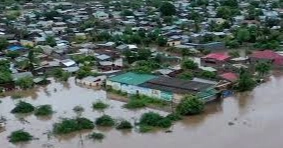
Deadly flooding triggered by weeks of torrential rain has claimed more than 100 lives across southern Africa, prompting helicopter rescues, mass evacuations, and warnings of further destruction as more rain is forecast, officials said Friday.
The fatalities span South Africa, Mozambique, and Zimbabwe, where prolonged downpours have overwhelmed rivers, damaged infrastructure, and displaced hundreds of thousands of people. Meteorological agencies cautioned that continued rainfall could worsen the situation.
Mozambique hardest hit
Mozambique has suffered the greatest impact, with flooding across large areas of its central and southern regions. The country’s disaster management agency reported 103 deaths during an unusually intense rainy season that began late last year. The fatalities include people killed by flooding, lightning strikes, collapsing buildings, and cholera outbreaks linked to the severe weather.
According to the World Food Program, more than 200,000 people have been affected nationwide, thousands of homes have been damaged, and tens of thousands may need to be relocated. The crisis has stretched the capacity of one of the region’s poorest nations, already battered by multiple cyclones in recent years.
Rising toll in neighboring countries
In South Africa, authorities said at least 30 people have died in floods affecting two northern provinces, with search-and-rescue operations still underway. Zimbabwe’s disaster agency reported 70 deaths and the destruction of more than 1,000 homes since the start of the year, along with widespread damage to schools, roads, and bridges.
Flooding has also been reported in Madagascar, Malawi, and Zambia. The U.S. Famine Early Warning System said flood conditions were occurring or anticipated in at least seven countries in southern Africa, potentially linked to the La Niña weather pattern, which often brings heavier rainfall to the region.
Military rescue operations in South Africa
South Africa deployed its military to assist in rescue efforts, using helicopters to reach people trapped on rooftops and in trees in Limpopo province. The army also evacuated police and border officials stranded at a checkpoint along the Zimbabwe border.
President Cyril Ramaphosa visited flood-hit areas on Thursday, saying some districts received nearly 400 millimeters (over 15 inches) of rain in less than a week. In one community, he said, dozens of homes were completely swept away.
Limpopo Premier Phophi Ramathuba reported that more than 1,000 houses were damaged across the province, many of them destroyed entirely. Significant destruction was also reported in neighboring Mpumalanga province, where roads and bridges collapsed.
In Nkomazi Municipality near the Mozambican border, residents worked to salvage their homes while preparing for additional storms. The South African Weather Service issued its highest red-level warning for further severe rainfall and flooding in the area.
“These were the worst rains I’ve ever seen here,” said resident Josephina Mashaba. “I’m still afraid they could come back.”
Evacuations at Kruger National Park
Severe flooding also affected South Africa’s Kruger National Park, one of the world’s largest wildlife reserves. About 600 tourists and park staff were relocated from flooded camps to higher ground after rivers burst their banks.
Park authorities closed the reserve to new visitors and said several areas were completely cut off. No injuries or deaths were reported, according to park officials.
Growing climate pressures
Southern Africa has endured a string of extreme weather events in recent years, including powerful cyclones and severe droughts that have intensified food insecurity across the region.
The World Food Program said current flooding in Mozambique has submerged more than 70,000 hectares of farmland, including rice and maize crops, further threatening the livelihoods and food supplies of thousands of small-scale farmers.