The Southern Ocean, one of Earth’s most remote regions, is far from tranquil. Towering waves that can engulf ships produce a constant roar along the Antarctic Peninsula, where expansive blue waters meet brilliant white ice.
Tourists in bright red jackets navigate the Lemaire Channel, nicknamed the “Kodak Gap” for its striking cliffs and ice formations. Armed with binoculars, they watch for orcas, seals, and penguins, witnessing firsthand a fragile ecosystem increasingly affected by climate change.
The Antarctic Peninsula is among the fastest-warming areas on the planet. Its surrounding waters act as a major carbon sink, absorbing about 40% of human-generated CO₂, according to the National Oceanic and Atmospheric Administration. Rising temperatures, driven by fossil fuel emissions, threaten to reshape the region’s wildlife and landscapes.
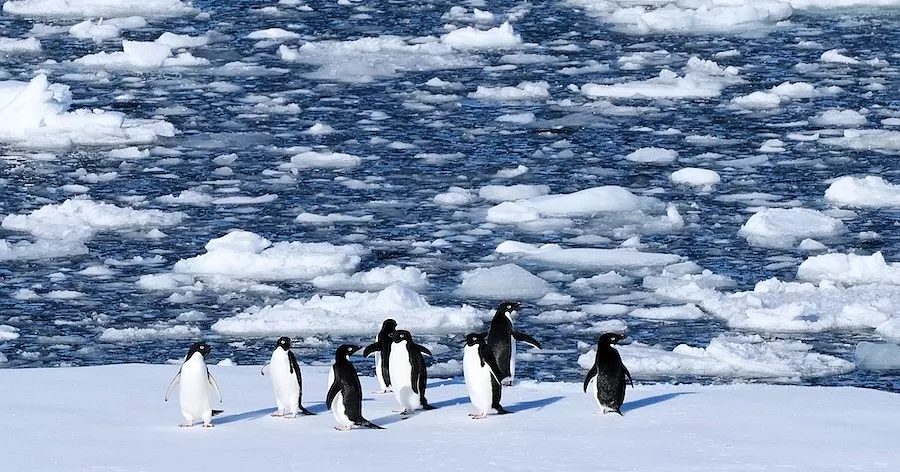
Gentoo penguins, recognized by their slender orange beaks and white eye patches, appear to be thriving. They are shifting farther south, nesting on exposed rocks and hunting in open water, allowing populations to grow. Adelie penguins, by contrast, face mounting challenges. These ice-dependent birds could lose 60% of their colonies by 2100 as warming waters reduce their food supply and safe resting areas, studies show. Between 2002 and 2020, Antarctica lost an estimated 149 billion metric tons of ice annually, according to NASA.
Loon population rebounds in Maine, bringing more haunting calls to lakes
For visitors, Antarctica remains a vast glacial wilderness. In the Drake Passage, a treacherous stretch of ocean, tourists marvel at orcas swimming in narrow channels and Pintado petrels gliding overhead.
Yet the scene may change dramatically in coming decades. Expanding Gentoo colonies, shrinking ice sheets, and increasing patches of exposed rock highlight the profound impact of climate change on this remote and fragile ecosystem.
Source: AP