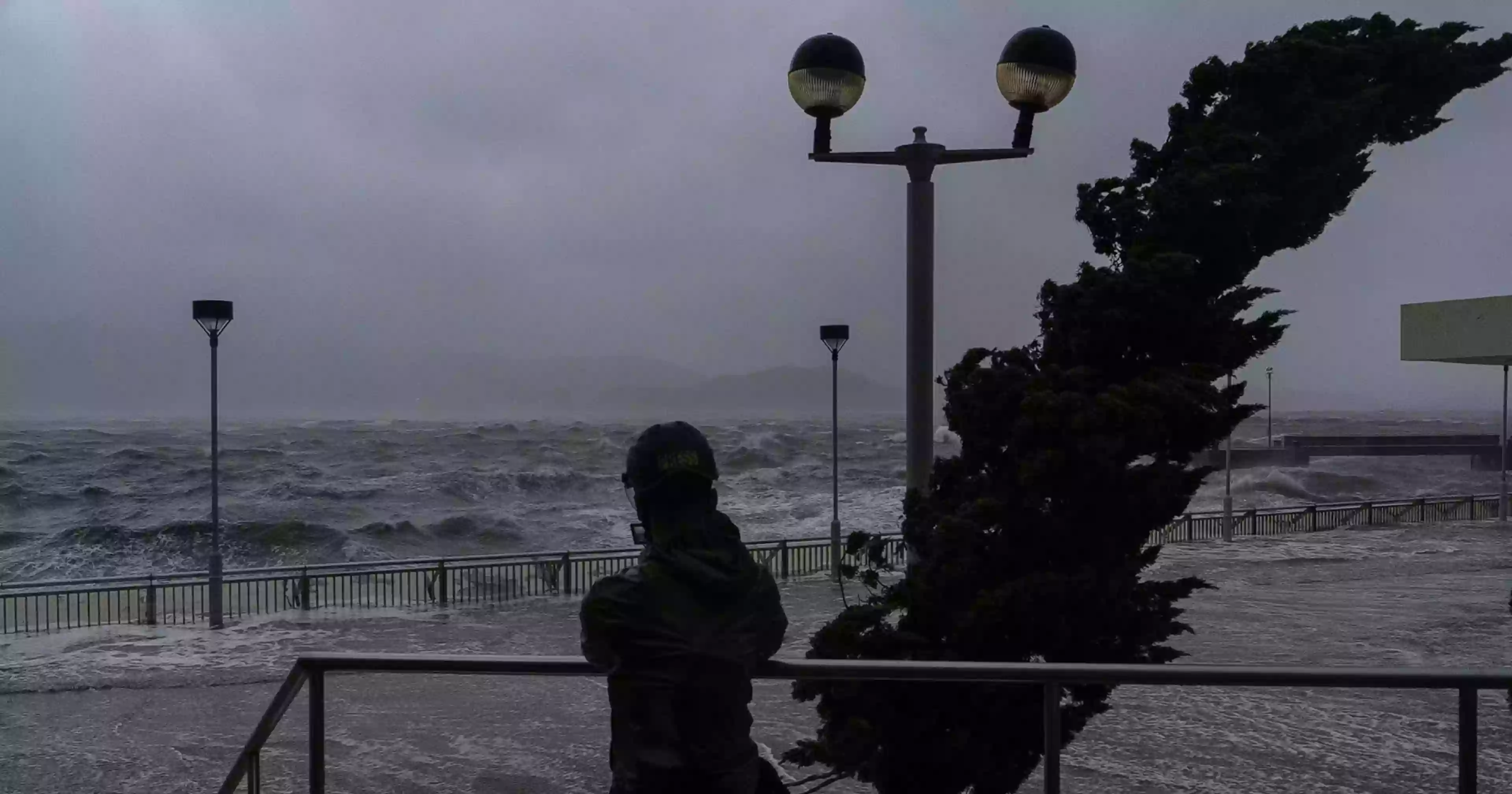
Super Typhoon Ragasa, one of the strongest storms in recent years, battered Hong Kong and southern China on Wednesday after leaving a deadly trail in Taiwan and the Philippines.
The storm churned up waves taller than lampposts along Hong Kong promenades, toppled hundreds of trees, and damaged waterfront infrastructure. Over 30 people were treated for storm-related injuries in the city, while viral videos showed seawater crashing into a hotel lobby and flooding its interiors.
Strong winds blew away parts of a pedestrian bridge’s roof and smashed vessels against the shore, shattering glass railings. Some promenades, cycling lanes, playgrounds and restaurants were left flooded, with furniture scattered chaotically.
Authorities in Guangdong province relocated nearly 1.9 million residents as the super typhoon approached landfall between Yangjiang and Zhanjiang. Schools, factories, and public transport were suspended across a dozen cities.
Hong Kong and nearby Macao shut schools, canceled flights, and opened temporary shelters. Streets in Macao turned into streams with debris floating, while power supply was cut in some low-lying areas for safety.
Philippines braces for floods, China on alert as Super Typhoon Ragasa barrels west
The Hong Kong Observatory said Ragasa, with maximum sustained winds near 195 kilometers per hour (120 mph), skirted about 100 kilometers south of the city. Officials warned that storm surges could rival those of Typhoon Mangkhut in 2018, which caused economic losses of HK$4.6 billion ($592 million).
Earlier, Ragasa caused devastation in Taiwan, where a barrier lake in Hualien County overflowed on Tuesday, washing away a bridge and turning Guangfu township roads into raging rivers. At least 14 people were killed, 34 injured, and contact was lost with 124 residents. More than half of Guangfu’s 8,450 residents were forced to take shelter on higher ground.
In the Philippines, authorities reported four deaths, including an elderly man killed in a rockslide, as nearly 700,000 people were affected across northern Luzon. Some 25,000 residents sought safety in government shelters.
The national weather agency said the typhoon would continue moving west to west-northwest at about 22 kph.
Source: Agency