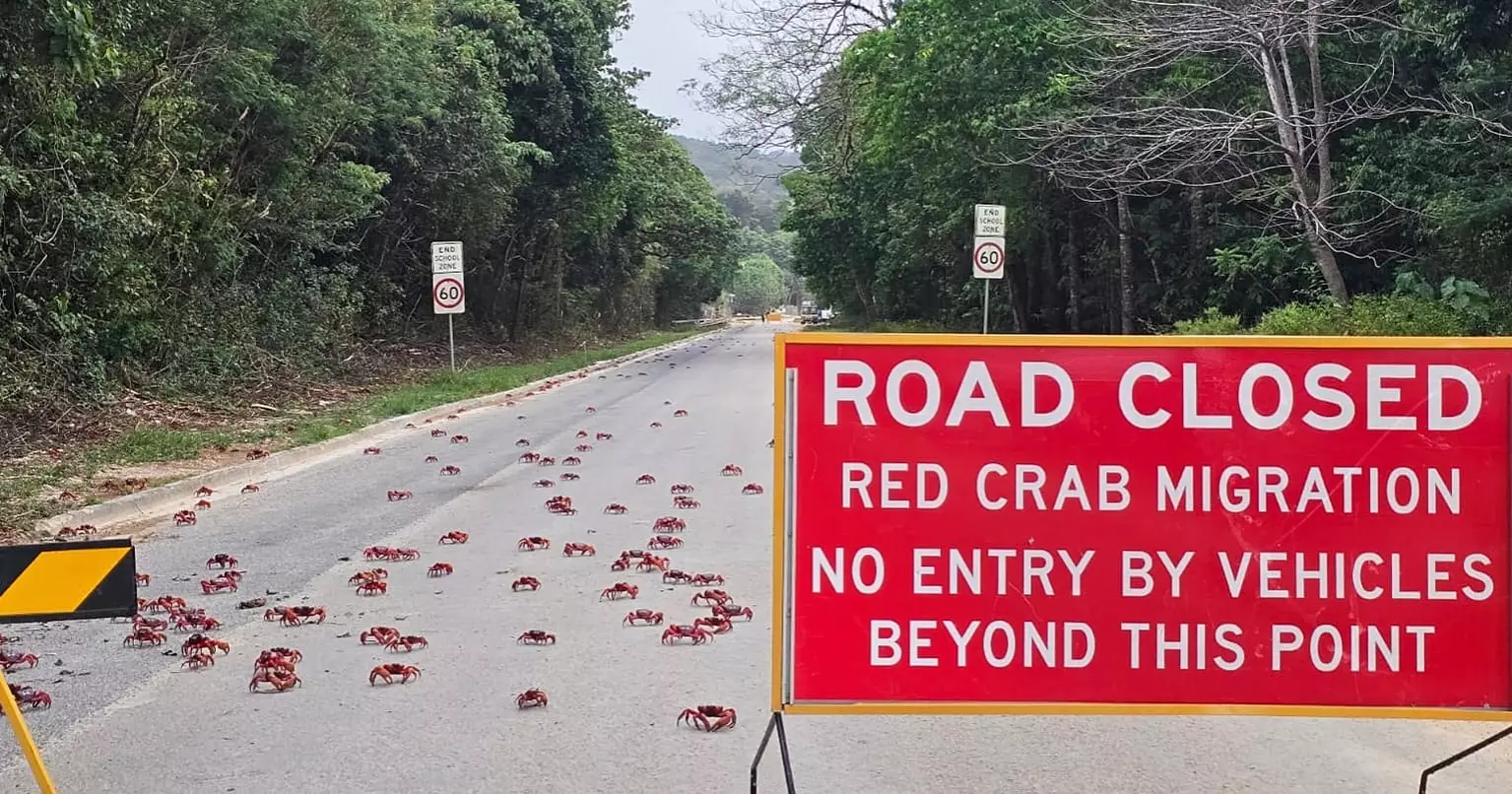
Tens of millions of bright red crabs are once again carpeting Christmas Island as they march from the forests to the ocean for their annual breeding migration — and residents are lending a hand with rakes and leaf blowers.
According to Christmas Island National Park acting manager Alexia Jankowski, the small Australian territory in the Indian Ocean is home to as many as 200 million of the species Gecarcoidea natalis. Around half of them — up to 100 million — are expected to make the journey from their inland burrows to the coast this year to breed.
Triggered by the first summer rains last weekend, the mass movement transforms the island’s roads, gardens, and beaches into a moving sea of crimson. During the cooler mornings and late afternoons, the crabs slowly make their way to the shore, often crawling over anything in their path — including roads, fences, and open doorways.
“For most of us, it’s a privilege to witness,” Jankowski said. “If you leave your door open, you might come home to a living room full of red crabs. Some people even have to rake them out of their driveways just to get to work without hurting them.”
Once at the coast, male crabs dig burrows where females will stay for about two weeks to lay and incubate their eggs. The eggs are expected to be released into the sea at high tide on Nov. 14 or 15, during the last quarter of the moon.
After hatching, the larvae spend about a month drifting in the ocean currents before returning to the island as tiny crabs — each about half the size of a fingernail. At that stage, locals switch from rakes to leaf blowers to help protect them.
“When they’re that small, we can’t rake them because we’d crush them,” Jankowski explained. “So we use backpack leaf blowers to gently move them off the roads and out of harm’s way. It looks a bit silly, but it helps keep thousands of baby crabs safe.”
For the island’s roughly 1,200 residents, the migration is both an inconvenience and a treasured spectacle — a vivid reminder of the island’s unique ecosystem and its delicate balance between people and nature.