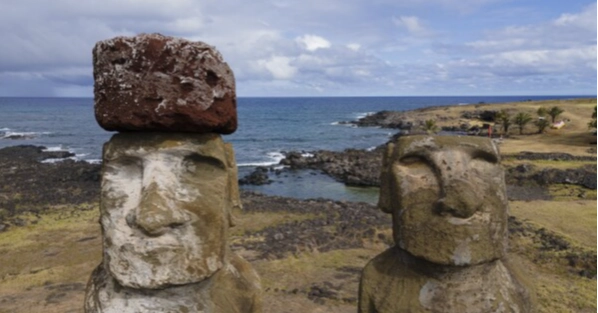
Rising sea levels could threaten Easter Island’s famed moai statues by the end of this century, with waves reaching the island’s largest ceremonial platform, Ahu Tongariki, as early as 2080, a new study warns.
The research, published in the Journal of Cultural Heritage, found that about 50 other cultural sites on the island — known locally as Rapa Nui — also face flooding risks. Using a high-resolution digital model of the eastern coastline, scientists simulated future wave impacts under different sea-level rise scenarios and matched them against heritage site locations.
Ahu Tongariki, home to 15 massive moai statues, is not only a major tourist draw but also a central part of Rapa Nui’s cultural heritage. The platform lies within Rapa Nui National Park, a UNESCO World Heritage site.
The island’s nearly 900 moai were carved between the 10th and 16th centuries to honor ancestors and chiefs. In 1960, a powerful Chilean earthquake triggered a tsunami that damaged several toppled moai, later restored in the 1990s.
Scientists transplant crossbred corals to bolster Miami’s reefs against climate change
Globally, heritage sites are under similar threat. A recent UNESCO report said nearly three-quarters of low-lying coastal sites in the Mediterranean and Africa face erosion and flooding due to climate change.
Lead researcher Noah Paoa, himself from Rapa Nui, said now is the time to discuss protective measures such as coastal reinforcements, breakwaters, or even relocating monuments. “It’s best to look ahead and act before the damage becomes irreversible,” he said.
Source: Agency