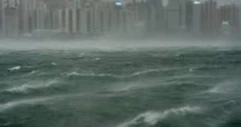
Typhoon Wipha swept across southern China and Hong Kong on Sunday, uprooting trees and causing significant disruptions to air travel across the region.
Hundreds of daytime flights were canceled or delayed at major airports in Hong Kong, Shenzhen, Zhuhai, and Macao, according to airport websites. In Hong Kong alone, approximately 400 flights were grounded, affecting nearly 80,000 travelers, local broadcaster RTHK reported. Some high-speed train services were also suspended.
The Hong Kong Observatory issued its highest storm warning—hurricane signal No. 10—as the typhoon passed just south of the city around midday, packing maximum sustained winds of 140 kilometers (87 miles) per hour.
Streets were littered with fallen branches, forcing vehicles to navigate around debris. Authorities said they had received over 350 reports of fallen trees, while 21 people were treated at public hospitals. No serious injuries were reported.
Approximately 240 people took shelter in government-run facilities, while popular attractions like Hong Kong Disneyland closed for the day.
After brushing past Macao, Wipha was expected to make landfall along China’s southern coastline later Sunday, before moving toward Vietnam later in the week.
Named by Thailand, Wipha previously crossed the Philippines as a tropical storm, soaking Taiwan on Saturday. The storm intensified monsoon rains in the Philippines, leading to flooding in northern Cagayan province that left one person dead.
More than 370,000 people across the Philippines were impacted by the storm’s effects, with over 43,000 forced to evacuate due to flooding, landslides, and strong winds. Officials said more than 400 homes were damaged.
Meanwhile, in South Korea, heavy rainfall unrelated to Wipha has left at least 14 people dead and 12 missing, government officials confirmed Sunday.