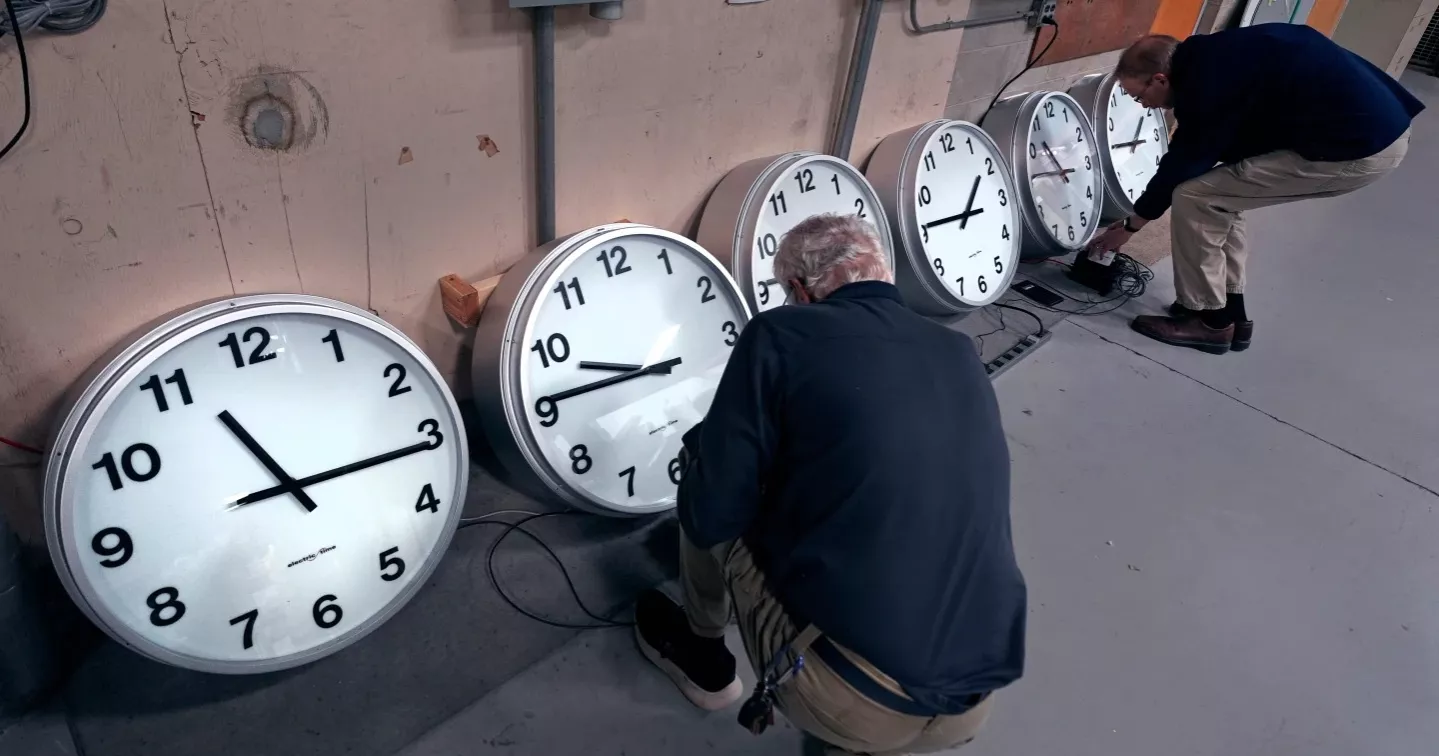
Daylight saving time ends at 2 a.m. local time Sunday across most of the United States, offering people an extra hour of sleep as clocks shift back to standard time until March 8. But health experts say enjoying the bonus rest should come with a dose of early morning sunlight to help the body adjust smoothly.
While many welcome the autumn switch, the sudden shift can still disrupt daily routines. Health groups including the American Medical Association and the American Academy of Sleep Medicine have long pushed for permanent standard time, saying the back-and-forth changes take a toll on our internal clocks.
A new Stanford University study supports that view, finding that the twice-a-year time changes are the least healthy option. Researchers concluded that although either permanent daylight saving or permanent standard time would be healthier, standard time best matches natural sunlight patterns and the body’s circadian rhythm.
Jamie Zeitzer, co-director of Stanford’s Center for Sleep and Circadian Sciences, compared the body’s internal clock to a conductor leading an orchestra, with each organ acting as a different instrument. When light exposure changes abruptly, he said, the synchronization suffers, and “each of the body’s systems just works a little less well.”
Sunlight plays the key role in this rhythm. Morning light helps the brain trigger alertness, while darkness at night increases melatonin, the hormone that promotes sleep. Too much evening light, whether from late sunset or screen exposure, delays that process.
Disrupted circadian rhythms can influence heart rate, metabolism, blood pressure and stress hormones.
The spring shift, which shortens sleep by an hour, is often harder to adjust to and has been linked to increases in traffic crashes and even heart attacks in the days that follow. People living with seasonal affective disorder may also struggle after the clocks change and daylight shortens.
Although many adapt quickly, the effects can be harsher on shift workers or the sleep-deprived. Nearly one-third of American adults get less than the recommended seven hours of nightly sleep, and more than half of teenagers fall short of the recommended eight or more hours.
Sleep experts recommend easing into the change by moving bedtime earlier in small increments ahead of the switch. They also emphasize getting sunlight early in the day, even by sitting near a window if going outdoors isn’t possible.
Most countries do not observe daylight saving time. Within the U.S., only Arizona and Hawaii remain on standard time all year.
Efforts in Washington to end the clock-changing ritual have stalled. The Sunshine Protection Act, which would make daylight saving time permanent, has yet to move forward in Congress.
Source: AP