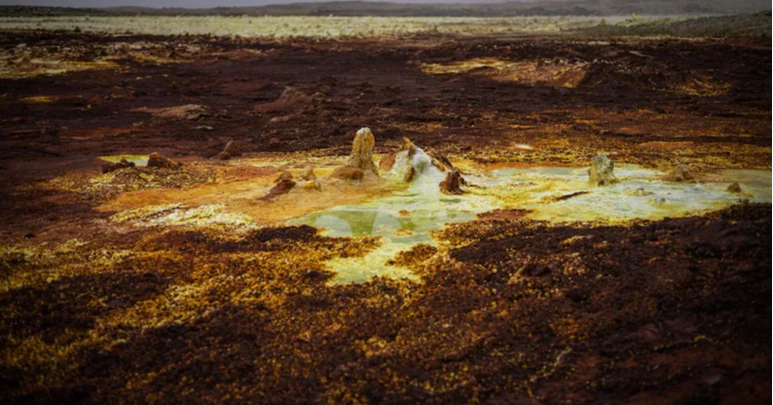
The Danakil Depression in Ethiopia is considered one of the most extreme environments on Earth, known for its intense heat, active volcanoes, acidic pools and strikingly colourful landscapes shaped by ongoing geological activity.
Often described as a “gateway to hell,” the region stands apart from typical travel destinations, as its defining features are natural forces such as shifting tectonic plates, geothermal activity and volcanic eruptions rather than human-built landmarks.
Located in the Afar region in northwestern Ethiopia near the Eritrean border, the depression is one of the lowest and most hostile places on the planet. It sits at the junction of three tectonic plates — African, Arabian and Somali — making it a key site for studying continental drift.
Due to this constant geological movement, parts of the land lie more than 100 metres below sea level. Scientists say the Earth’s crust here continues to crack and sink, allowing magma to rise closer to the surface and reshape the terrain.
The region is also among the hottest inhabited places in the world, with temperatures often exceeding 40 degrees Celsius and sometimes reaching 45 degrees. Low rainfall and harsh conditions mean that very few plants or animals can survive, while steam vents, sulphur fumes and exposed salt flats dominate the landscape.
One of its most notable features is Erta Ale, an active volcano that contains a rare, permanent lava lake. The molten lava continuously bubbles and glows, offering scientists and visitors a unique view of volcanic activity.
Another major attraction is Dallol, where bright mineral formations, sulphur vents and highly acidic pools create an almost surreal environment. Some of these المياه have extremely low pH levels, making them among the most acidic on Earth and highly dangerous despite their vivid colours.
Although much of the area is uninhabited, the Afar people live in nearby settlements and have adapted to the harsh conditions over generations. Their livelihoods depend largely on salt mining and livestock such as camels and goats, with traditional salt caravans still transporting blocks of salt across the desert.
Reaching the Danakil Depression is difficult and typically involves travelling from the city of Mekelle in four-wheel-drive vehicles, often with guided tours due to safety and environmental challenges.
The best time to visit is between November and February, when temperatures are relatively lower, though still extreme. Experts advise careful preparation, including adequate supplies and experienced guidance.
Scientists consider the Danakil Depression a natural laboratory that offers valuable insights into Earth’s structure and the processes that shape continents, while for travellers it provides a rare opportunity to witness raw geological forces in action.