As Israel commemorates the second anniversary of the October 7 Hamas attacks, the country remains deeply divided, with the war in Gaza still raging and dozens of hostages still held captive.
The central memorial event, set for Tuesday, is being led not by the government, but by grieving families—highlighting widespread public frustration with Prime Minister Benjamin Netanyahu’s leadership, particularly his inability to secure a ceasefire that could bring home the remaining captives.
Ongoing Conflict in Gaza
In Gaza, Israel’s ongoing military campaign has resulted in widespread devastation. Entire neighborhoods have been destroyed, and tens of thousands of people killed. As Israeli forces launch a renewed push into Gaza City, many civilians are once again trying to flee south—though many lack the means or safe routes to escape.
The Attack That Changed Everything
On October 7, 2023, Hamas-led militants launched a surprise assault on southern Israel, overwhelming military outposts, attacking civilian communities, and targeting an outdoor music festival. The attackers killed approximately 1,200 people, mostly civilians, including women, children, and the elderly.
They also kidnapped 251 people. While most have since been released through ceasefires and negotiations, 48 remain in Gaza. Israel believes around 20 of them are still alive. Hamas has demanded a permanent ceasefire and Israeli withdrawal in exchange for their release. Netanyahu has rejected this, vowing to continue the war until all hostages are returned and Hamas is dismantled.
A Regional Conflict Expands
The attack triggered wider regional tensions, with Israel clashing with Iran-backed groups such as Hezbollah in Lebanon. A 12-day war in June saw the U.S. and Israel jointly target Iranian military and nuclear infrastructure. In the months since, Israel has reportedly eliminated several top militants, Iranian generals, and nuclear scientists, while also gaining control of much of Gaza and parts of Lebanon and Syria.
Still, Netanyahu’s failure to secure the hostages' return has led to mass weekly protests and left Israel more internationally isolated than it has been in decades.
Remembering the Nova Festival Massacre
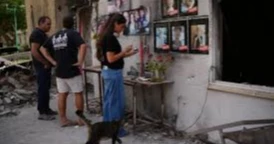
One of the deadliest sites of the October 7 attacks was the Nova music festival near Reim, where nearly 400 people were killed and dozens abducted. The area has since become a national symbol of grief, with memorials and photos of the victims displayed on Israeli flags. Families plan to build a sukkah—a traditional structure for the Jewish holiday of Sukkot—on the site to honor the anniversary.
Due to the holiday, no official memorial will take place at the Nova site. Instead, the main ceremony will be held in Tel Aviv, featuring speeches and musical performances. It is being organized by Yonatan Shamriz, whose brother Alon was mistakenly killed by Israeli forces after escaping captivity earlier in the war.
Peace Talks and International Pressure
As the war drags on, indirect negotiations between Israel and Hamas resumed Monday in Egypt’s Sharm el-Sheikh, focusing on a U.S.-backed peace proposal introduced by President Donald Trump. Talks were expected to continue Tuesday.
According to Gaza’s Health Ministry, more than 67,000 Palestinians have been killed since the war began. The ministry, which is part of the Hamas-run government, does not separate civilian and combatant deaths, but says women and children account for roughly half the fatalities. Independent organizations generally consider its figures credible.
Israel’s offensive has forced about 90% of Gaza’s population—roughly 2 million people—to flee their homes, many multiple times. Severe restrictions on aid have caused widespread hunger, with experts warning that famine conditions now exist in parts of Gaza, including Gaza City.
International human rights groups and legal experts have accused Israel of committing genocide, and the International Criminal Court (ICC) is pursuing arrest warrants for Netanyahu and his former defense minister, citing the use of starvation as a weapon of war.
Israel strongly denies the accusations, insisting its military operations are lawful acts of self-defense. It says it takes significant steps to avoid civilian casualties and blames Hamas for embedding its fighters and weapons in civilian areas.
The Broader Impact
Hamas has framed the October 7 assault as retaliation for decades of Israeli occupation, settlement expansion, and military control of Palestinian territories. But the attack and its aftermath have led to massive suffering in Gaza, pushing the hope of an independent Palestinian state further out of reach.