
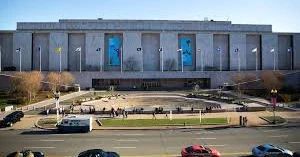
The recent removal of a reference to Donald Trump’s impeachments from a Smithsonian museum exhibit has triggered renewed debate over how history is preserved, presented — and potentially manipulated — especially when it involves powerful political figures.
On Friday, the Smithsonian Institution confirmed it had taken down mention of Trump’s 2019 and 2021 impeachments from a temporary exhibit panel on the U.S. presidency. While the museum denied facing political pressure from the Trump administration, the move has drawn scrutiny amid broader concerns about the politicization of historical memory.
The museum said the exhibit will soon be updated to reflect all presidential impeachment proceedings throughout American history.
Trump, now seeking a return to the White House, has long called for institutions under federal oversight to focus on “national achievements” rather than what he labels “divisive” topics. In response to the panel’s removal, the White House issued a statement, without addressing impeachment directly, saying it supports updating displays to “highlight American greatness.”
But historians and scholars argue that historical accuracy cannot be compromised for political comfort.
A wider campaign to reshape historical narratives?
The Smithsonian's decision comes against a backdrop of past actions by Trump’s administration to reshape cultural and historical institutions — such as removing a gay rights activist’s name from a Navy ship, seeking to defund public broadcasting, and reshuffling leadership at major cultural centers.
How to protect yourself from wildfire-related air pollution
“This is part of a broader effort by the president to influence and shape how history is depicted at museums, national parks, and schools,” said Julian E. Zelizer, professor of history and public affairs at Princeton University. “It’s not just about the country’s narrative — it’s about his place in it.”
The debate echoes similar struggles elsewhere. In authoritarian regimes like China and the former Soviet Union, history has often been rewritten or censored to maintain state power and suppress dissent. In such systems, inconvenient facts and figures are erased from textbooks and public memory alike.
Jason Stanley, a leading scholar on authoritarianism, emphasized how crucial control over history is for political dominance. “If they don’t control the historical narrative,” he said, “then they can’t create the kind of fake history that props up their politics.”
Presidents shaping their own legacy — and limits
The impulse to manage historical memory is hardly unique to Trump. U.S. presidents and their families have long sought to influence how they are remembered — from Jackie Kennedy’s editorial influence over accounts of JFK’s assassination to Ronald and Nancy Reagan orchestrating sympathetic documentaries.
Yet, scholars argue that Trump’s approach goes further. Rather than merely shaping his legacy, critics say he is fostering an atmosphere where institutions may feel pressured to choose between political loyalty and historical truth — even without direct orders.
Robin Wagner-Pacifici, a sociologist at the New School, said such museum exhibits are essential for helping people “situate themselves in history.” Without them, she warned, “it seems like we just kind of burst forth from the Earth.”
China’s traditional Baijiu spirit gets a makeover to woo younger drinkers
Timothy Naftali, who helped overhaul the Nixon Presidential Library to give a more objective account of the Watergate scandal, called the Smithsonian’s decision “concerning and disappointing.”
“Museum directors need red lines,” said Naftali, now at Columbia University. “Removing this panel crosses one.”
Power and memory
Despite his immense influence, Trump’s fixation on museum exhibits and public memory shows that legitimacy in politics is never fully secure, experts say.
“He’s constantly working to reshape how the public sees him and the country,” said Wagner-Pacifici. “Power has to be reconstituted constantly. It can never rest on its laurels.”
Trump has previously accused the Smithsonian of promoting a “divisive, race-centered ideology,” reinforcing how the presentation of history — especially in public institutions — has become a battleground in America’s ongoing cultural and political struggles.
Source: Agency