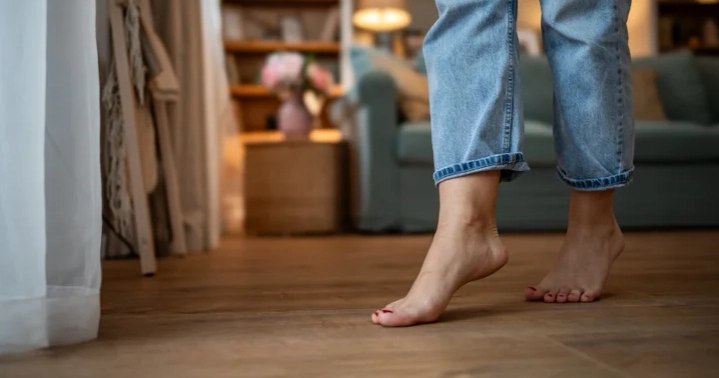
In many cultures, including those in Asia, removing shoes before entering a home is a common practice, particularly in households with carpeted floors. However, few people realise that walking barefoot indoors may offer notable health advantages.
Dr Robert Conenello, a certified clinical podiatrist, explained to HuffPost that walking barefoot helps strengthen the intrinsic muscles of the feet. These muscles naturally weaken over time due to ageing and frequent shoe use, making barefoot walking an effective way to maintain foot health.
Dr Conenello strongly advocates for the practice, emphasising the connection between foot muscles and overall mobility. He noted that reduced foot strength can lead to limited movement as people grow older. “Many of the conditions I treat stem from the inability to properly engage these muscles for normal movement and metabolic efficiency,” he said.
Beyond strengthening the feet, walking without shoes also benefits the skin. Dr Hannah Kopelman, a dermatologist, highlighted that it allows the skin to breathe, reducing moisture buildup and the likelihood of fungal infections such as athlete’s foot. She also pointed out that going barefoot can have a calming effect, similar to a mini reflexology session.
Remnant Cholesterol and its impact on heart health
“For those without pre-existing foot or skin conditions, this practice can serve as a natural way to connect with the surroundings and encourage mindfulness,” she explained.
Despite the benefits, there are some drawbacks. Walking barefoot may expose the feet to irritants, allergens, sharp objects, or cleaning chemicals on the floor.
Individuals with chronic skin conditions, such as eczema or dermatitis, may be particularly vulnerable. However, Dr Conenello recommended a simple solution—washing and thoroughly drying the feet before applying moisturiser.
Another concern is foot fatigue or joint discomfort, particularly for those who stand for long periods, such as while cooking. To minimise strain, Dr Conenello advised wearing supportive footwear when standing for extended durations. Wearing socks can also help by creating a protective barrier between the feet and the floor.
This is for informational purposes only and should not be considered medical advice.