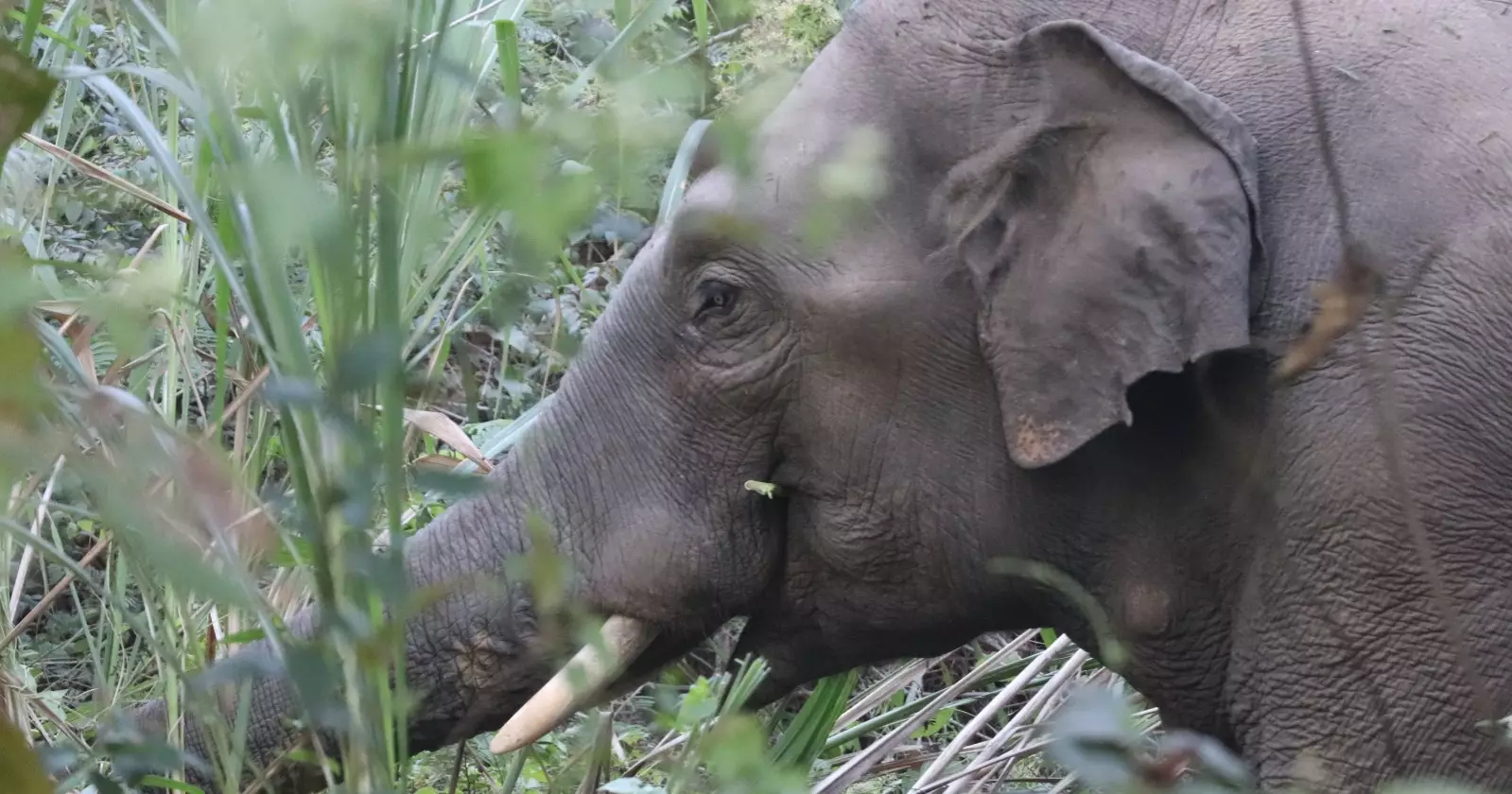

I was scheduled to travel to Bogor, Indonesia, to attend the 4th meeting of the Asian Elephant Specialist Group from May 20-22, 1992. When I went to the visa office of the Indonesian Embassy in Dhaka, the visa officer asked me about the purpose of my trip to Bogor.
After hearing my explanation, he was surprised and asked, “Are there elephants in Bangladesh?”
I replied, “Why are you so surprised?”
He said, “Your country is so small, with so many people, how can elephants survive there?”
I responded, “Your country also has a large population, yet elephants still survive there.”
He said, “But our country is much bigger.”
I explained, “We have been making continuous efforts to figure out how to share our country's limited space with wildlife.” I also mentioned, “Our government is very aware of this issue, and the people are quite enthusiastic about wildlife conservation.”
I personally witnessed this enthusiasm among the people of Sherpur. There were no elephants in that area for many years. But when a herd of elephants descended from the hills of Meghalaya in India — returning to what could be called the homeland of their ancestors — the local people were so excited that they invited their relatives from Dhaka and elsewhere to come and see the elephants.
However, that excitement faded once the elephants decided to stay, and eventually, conflicts began to emerge.
In 2004, two elephants crossed over from India’s Jharkhand, entered Bangladesh through Meherpur, and made their way to Gopalganj after crossing the Padma River. I, along with the WildTeam team, possibly arrived in Gopalganj around 3 am on May 17, 2004.
At that time, Md. Shamsur Rahman, the Conservator of Forests for the Wildlife Division of the Bangladesh Forest Department, informed me that the elephants had already moved on to Bagerhat.
In just eight days, the two elephants had traveled through eight districts of Bangladesh, and people everywhere welcomed them warmly. Some even carried buckets of water to offer them. A 28-member team from India, including mahouts (elephant handlers) and experts, arrived with 'Kunki' elephants (trained elephants used to manage wild ones) and large trucks.
The first elephant was tranquilized right after it had finished eating all the jackfruits from a tree in someone’s yard. I asked the elderly woman of the house, “Mother, doesn’t it feel sad that the elephant ate all the jackfruits from your tree?”
She replied, “No, I am very happy that an elephant came to my house!”