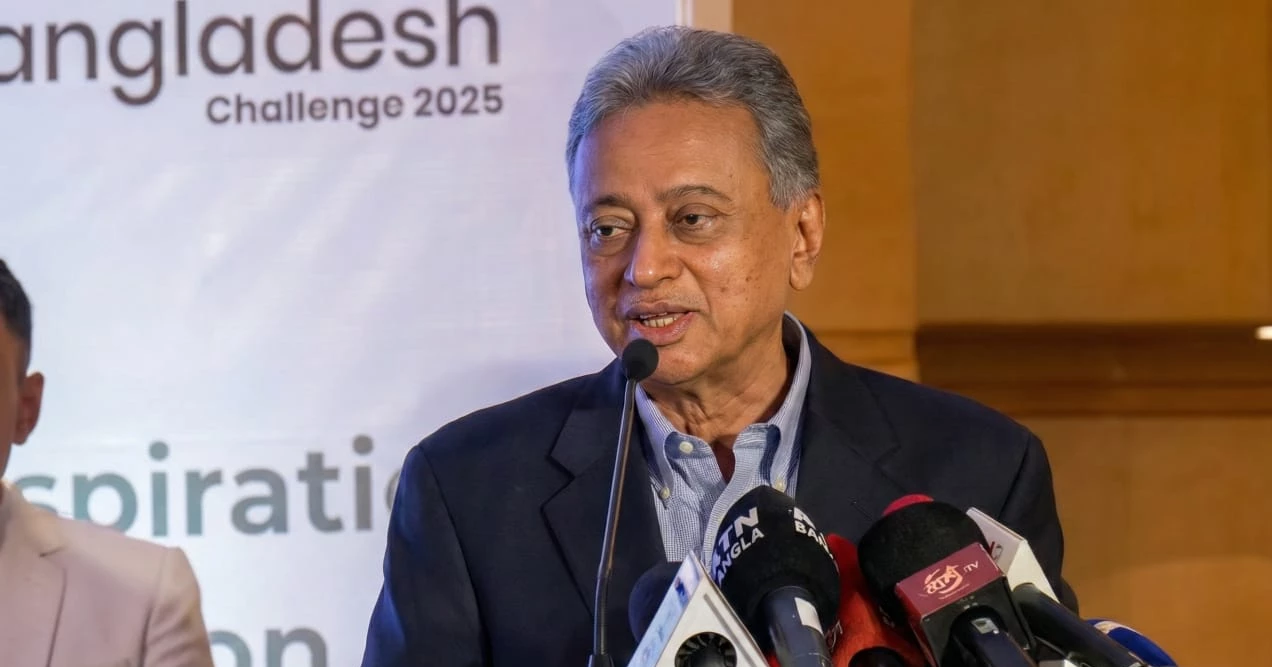
BNP Standing Committee member Amir Khosru Mahmud Chowdhury on Tuesday said their party would prioritise investment at the grassroots level instead of megaprojects if it returns to power, ensuring that development benefits reach all citizens.
“Many megaprojects have already been implemented. Our focus now is on ensuring that a village artisan—someone making tools or crafts—can sell products on platforms like Amazon or eBay. That is where we plan to invest,” he said.
Speaking at an event titled ‘Future Bangladesh Challenge 2025’ at a city hotel, Khosru said the BNP aims to empower marginal producers so they can access global markets.
BNP’s development agenda will include both demographic dividend and longevity dividend, said Khosru, claiming the party has prepared tailored project packages with detailed implementation roadmaps.
“Whenever a project is proposed, implementation becomes a concern. BNP has structured every project with a clear execution plan. The goal is simple—prosperity for all and development that touches every citizen,” he said.
Highlighting the need to utilise retirees effectively, he said, “A person retiring at 59 still has valuable contributions to offer the nation. BNP has specific plans on how to engage experienced retirees productively.”
On education, the BNP leader said the current system is not aligned with the job market. Citing China, where 60 percent pursue vocational training, he said Bangladesh continues to produce large numbers of graduates who struggle to find employment due to inadequate skill development.
“We must think about innovation. In the US, 2,000–3,000 patents are filed every month. That shows their philosophy of progress. Our curriculum needs to shift toward a work-oriented model,” he said.
Elected govt to review telecom, all other policies: Khosru
Khosru also said BNP plans to create employment opportunities for about 30 lakh persons with disabilities who are able to work, while the government would take responsibility for those who are fully incapable.
He said the party will introduce a new economic model focusing on youth-driven innovation. “We want to work with young people, use their innovative ideas, and turn our population into a skilled human resource.”