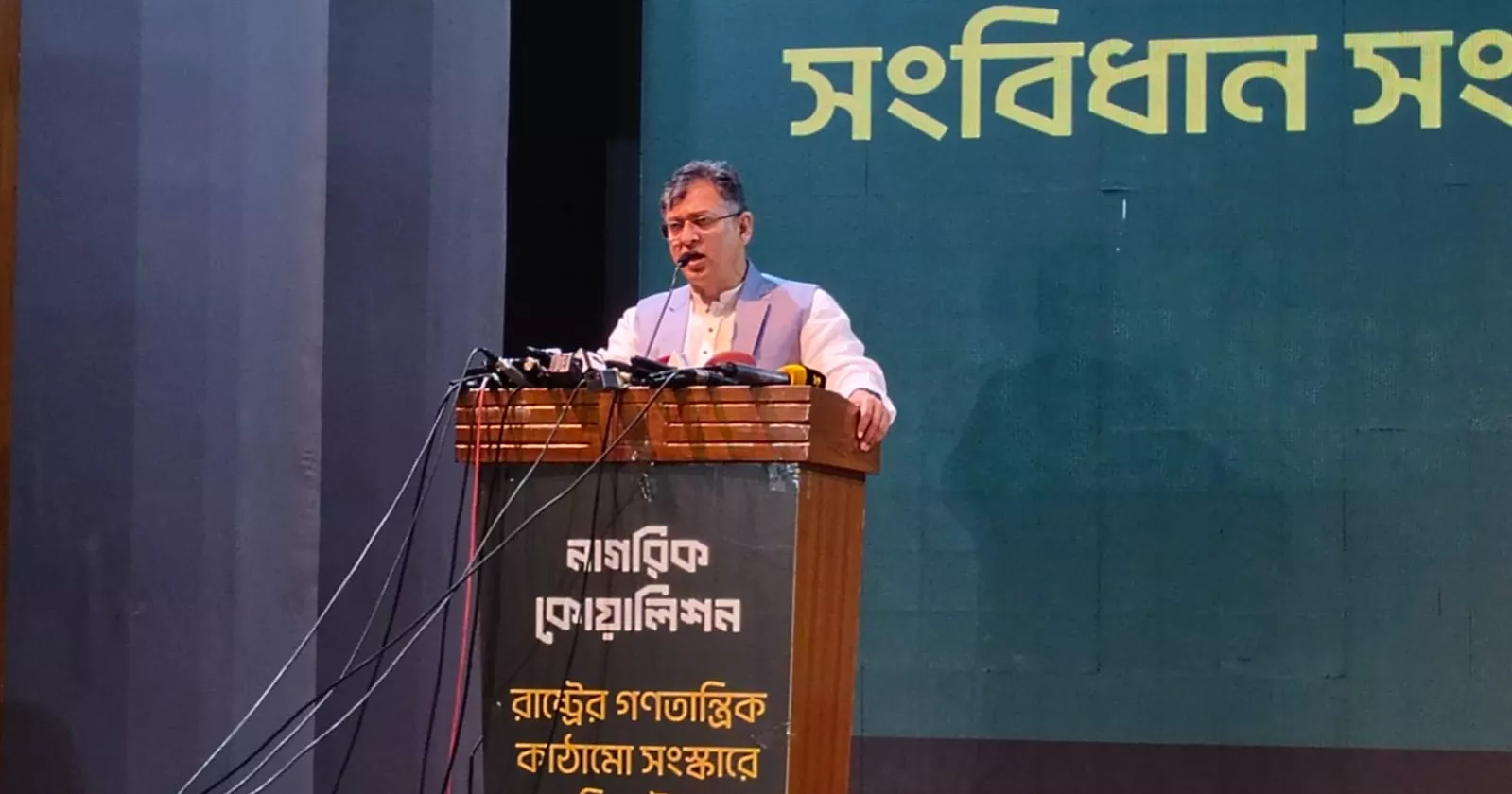
BNP senior leader Salahuddin Ahmed said on Sunday that their party welcomed the government’s move to amend the International Crimes Tribunal Act, aiming to bring the Awami League to trial as a political party and to ban its activities until the trial is completed.
“A historic event took place in the national life of Bangladesh yesterday (Saturday). I have already welcomed those who played the crucial role in this regard,” he said during a discussion.
The BNP leader also said, “I also welcome the interim government's move to amend the International Crimes Tribunal Act to bring the Awami League in the trial process as a political party.”
The discussion was organised on seven proposals of the Citizen Initiative, Citizen Coalition and Citizen Alliance for Reforming the Democratic Structure of the State at the auditorium of the International Mother Language Institute.
Salahuddin, a BNP Standing Committee member, said he himself, on behalf of the party, placed the demand for the trial of Awami League for committing mass killings and crimes against humanity through the amendment to the International Crimes Tribunal Act on February 5.
He said their party on different occasions also made the demand as per the desire of the country’s people.
“We also raised this demand as a party in many places and the people of Bangladesh wanted it. We met the Chief Adviser on 10 February and gave that proposal in writing,” Salahuddin said.
He said had the Chief Adviser taken the matter into consideration at that time, it would not have led to the embarrassing situation of the last two days.
The BNP leader said there are precedents in different countries of the world where all fascist parties were brought to justice as parties responsible for genocide and were banned.
“There are examples of this all over the world. So, I welcome the announcement that the interim government will ensure the trial of the Awami League through legal processes, even if it is late,” he observed.
As journalists sought his comments about the decision to ban the Awami League’s activities, Salahuddin Ahmed, emerging from the discussion, said, “We also welcome the government’s decision to ban their (Awami League’s) political activities until the judicial process is completed.”
He said the government decided to ban the activities of the Awami League under the Anti-Terrorism Act. “I think the government will need to amend the Anti-Terrorism Act for this, as the law currently does not specify the banning of political activities; it only talks about banning political parties.”
In response to a question, the BNP leader said, “Does the world still recognise the Awami League as a political party? Do the people of this country? The Awami League has become a fascist force… it has turned into a mafia entity. For years, it has practiced fascism and mafia-style rule over the people of Bangladesh.”
He also said the Awami League itself had sealed its political demise through oppression, persecution, torture, and genocide.
“It is no longer a political party. It is a mafia party, a mafia and fascist force. We do not consider it deserving of the label of a political party. Democracy doesn’t exist in the Awami League’s DNA—how can it then practise politics?” Salahuddin observed.
When asked why the BNP was not joining the programmes of various political parties at Shahbagh demanding a ban on the Awami League, he said, “Why should we (BNP) go to Shahbagh? We placed our demands in writing to the Chief Adviser several months ago. We have spoken about it verbally, raised it in seminars, symposiums, and at various events.”
Claiming that people across the country are eager to vote in the next parliamentary elections, the BNP leader said, “For that, we have called upon the Chief Adviser to announce a roadmap for the next election soon. Otherwise, such an embarrassing situation may arise again.”
The Council of Advisers, in a special meeting on Saturday night, decided to ban all activities of the Awami League—including in cyberspace—under the Anti-Terrorism Act, until the trial of the party and its leaders under the International Crimes Tribunal is completed.
While briefing reporters in front of the State Guest House Jamuna, Law Adviser Dr Asif Nazrul said the decision was taken to safeguard the country’s security and sovereignty, ensure the safety of leaders and activists of the July Movement, and protect the plaintiffs and witnesses involved in the International Crimes Tribunal.
He said the meeting also approved an amendment to the International Crimes (Tribunals) Act.