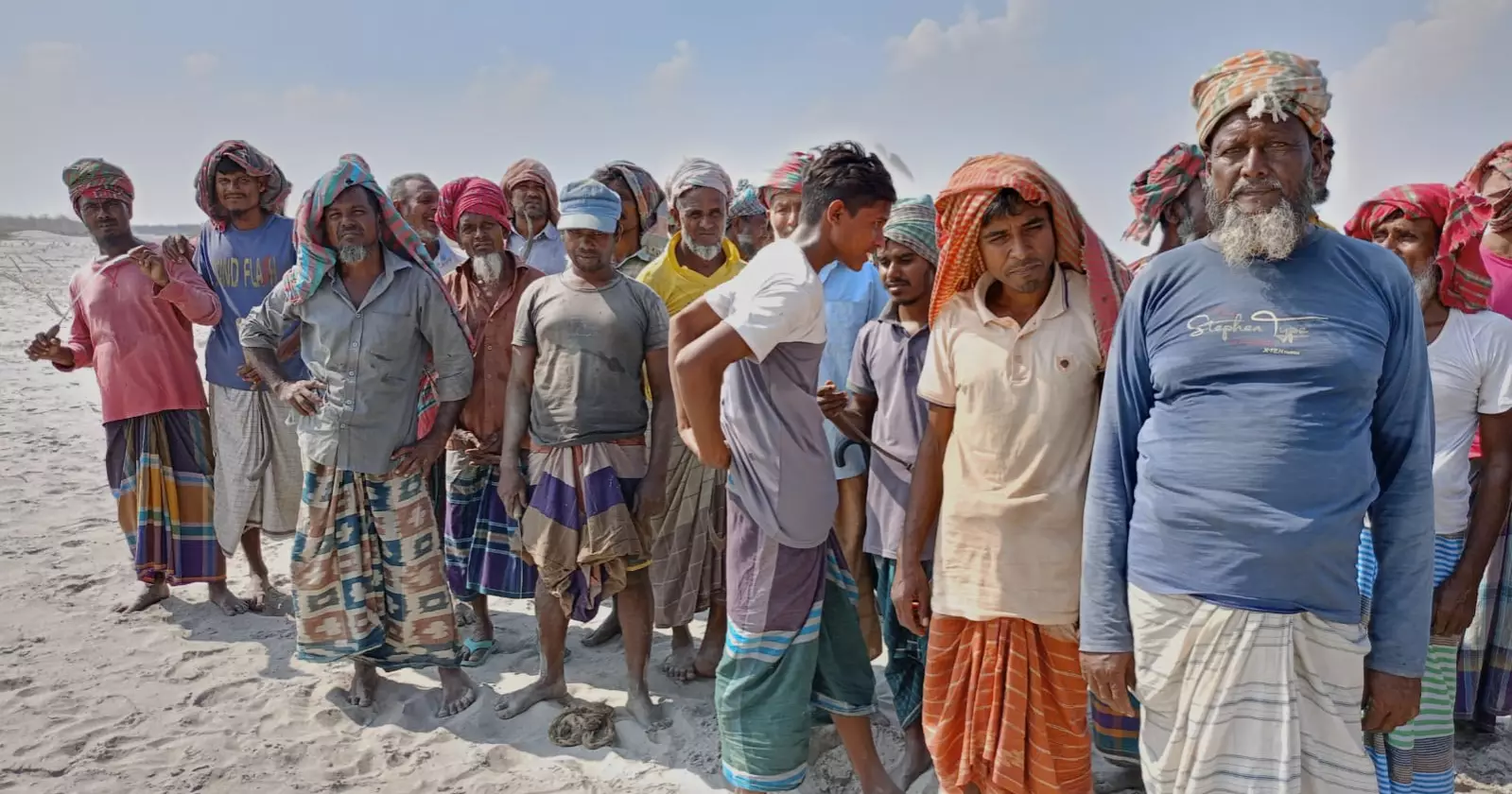
Despite the rising political atmosphere ahead of the national elections, the impact is barely felt in the char areas of Kurigram.
For residents here, immediate concerns far outweigh electoral politics — from securing a home and accessing medical care to ensuring their families survive and their children receive an education.
About 5,200 voters live in around 20 chars, including Kalir Alga, Goyalpuri, Purba Jhunka, Ashtaashir Char, Chira Khaa, and Khear Char in Jatrapur Union of Kurigram Sadar Upazila, separated by the Brahmaputra River. Many are not very interested in this year’s national parliamentary elections. Many do not know what a 'yes' or 'no' vote is and have little understanding of the voting process.
Poverty and river erosion dominate daily life in this remote char area of Kurigram, the country's most impoverished district. The lives of people in the areas depend on the river, and are highly uncertain. Every monsoon, homes, croplands, and roads are washed away as a result of continuous river erosion since 1950.
How Undecideds May Decide the Election
Jamal, a resident of Kalir Alga Char, said, “What will happen with voting? The river keeps breaking. Today there are houses, tomorrow there are none. Voting does not come to mind with this thought.”
Rafiqul Islam, a farmer from Goyalpuri Char, said that no one visits during voting time, and even if they do, they leave once voting is over. “So we don’t have time to think about the vote,” he added.
Crisis in Education and Healthcare
Although government primary schools exist in the char areas, the education system has collapsed as teachers rarely attend.
A parent from Purba Jhunka Char said that there is a school, but no one knows how many days a month the teacher comes. “Children are falling behind in their studies.”
Healthcare is also precarious. There is no permanent health centre. Rokeya Begum, a housewife from Chira Khaa Char, said, “It is difficult to find a boat if you are sick. It takes a long time to reach the city. Who will think about voting then?”
Few women in the race as Bangladesh goes to polls
Professor Shafiqul Islam Bebu, president of the Char Development and Implementation Council, Kurigram district, said Kurigram district has 469 chars, including 16 island chars, covering about 800 square kilometres.
“Among these, about 550,000 people live in 269 chars. There is practically nothing to speak of in terms of health, education or communication in these areas,” Bebu said.
He added that the char people have lost trust in political leaders, as promises made earlier have not been implemented. “As a result, people are not very interested in this year’s elections.”
Political analyst and senior journalist Professor Liakot Ali said Kurigram ranks among the poorest of Bangladesh’s 64 districts. “Out of 2.329 million people, about 1.65 million are poor. The poverty rate is even higher in char areas,” he said.
Regarding voters, he added that previous governments have contributed to reluctance not only in char areas but among the general public as well. “Most voters remain silent in this area. It is difficult to predict which candidate will win.”
Char residents allege that election campaigns focus on the mainland and urban areas, with little attention to the chars. Al Amin, a young man from Khear Char, said, “No one comes to the chars to campaign. If there is no development, how will people be interested in voting?”
Residents said they are not against voting, but they want to see real development after the election, not just before it.
Nearly one million security personnel to guard Bangladesh elections
They said only when river erosion is prevented, permanent communication systems are ensured, and education and healthcare are available, will voting truly become meaningful.
The char residents have a single demand — assurance of survival before the election. Once basic development is secured, they believe participation in elections will naturally increase.