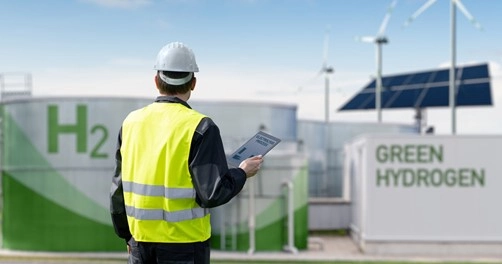
A groundbreaking international study led by Australia's Monash University has identified a promising solution for producing green hydrogen at scale, addressing a major obstacle to global decarbonization efforts.
Researchers revealed on Thursday that they have made significant progress in tackling the challenge posed by the limited availability and high cost of iridium—a critical component in current advanced hydrogen production technologies.
Daily walking can lower risk of chronic back pain: Study
The study proposes that cobalt, a more abundant and less expensive metal, could serve as an effective alternative in electrolyzers used to produce green hydrogen.
“Cobalt is significantly cheaper than iridium, but making it stable enough to withstand the harsh conditions inside electrolysers has long been a challenge,” said Darcy Simondson, a contributor to the research and a Monash PhD graduate.
Previous attempts to use cobalt-based catalysts had failed due to issues with stability.
However, the Monash-led team, in collaboration with researchers from Germany, the U.S., and the U.K., has overcome this hurdle after more than three years of intensive work using advanced spectroscopic, electrochemical, and computational techniques.
The study, published in Nature Energy, found that catalytic activity and material degradation in cobalt anodes occur independently.
This discovery enables enhanced performance without sacrificing the catalyst’s durability.
The findings not only open the door to cost-effective, large-scale green hydrogen production but could also accelerate advancements in other catalyst technologies.