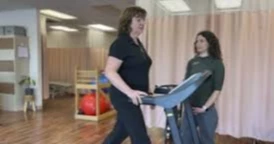
A groundbreaking international study has found that a structured, long-term exercise program significantly improves survival rates and reduces cancer recurrence in colon cancer patients.
Spanning three years and five countries — Canada, Australia, the UK, Israel, and the US — the randomized controlled trial is the first of its kind to demonstrate a direct link between exercise and improved outcomes for colon cancer survivors. The results were presented Sunday at the American Society of Clinical Oncology’s (ASCO) annual meeting in Chicago and published in the New England Journal of Medicine.
The study tracked 889 colon cancer patients who had completed chemotherapy. Half received educational materials about nutrition and physical activity, while the other half participated in a structured exercise coaching program. Over the course of the program, participants met regularly with coaches — biweekly for a year and monthly for the following two years — to help incorporate physical activity into their routines. Many, like 62-year-old Terri Swain-Collins of Kingston, Ontario, opted for consistent walks several times a week.
After eight years, the exercise group showed a 28% reduction in cancer recurrence and a 37% decrease in overall mortality compared to the control group. Though participants experienced some muscle strains and minor issues, the benefits far outweighed the risks.
“This is the highest level of evidence we’ve had showing exercise directly impacts cancer survival,” said Dr. Julie Gralow, chief medical officer of ASCO. Experts now say exercise support should be integrated into cancer care, much like certain medications.
Dr. Christopher Booth, co-author of the study, emphasized the affordability of the intervention, noting it could cost a few thousand dollars per patient while providing significant health gains. Meanwhile, researchers continue to analyze blood samples collected during the study to understand how exercise biologically contributes to cancer prevention, possibly through insulin regulation or immune system enhancement.
Swain-Collins, who continues to exercise regularly even after her coaching ended, credits the program for helping her stay active and feel in control of her health. Co-author Kerry Courneya of the University of Alberta believes the findings will empower patients to embrace physical activity with renewed motivation.
“Now we can say with confidence: exercise improves survival in colon cancer,” Courneya said.