
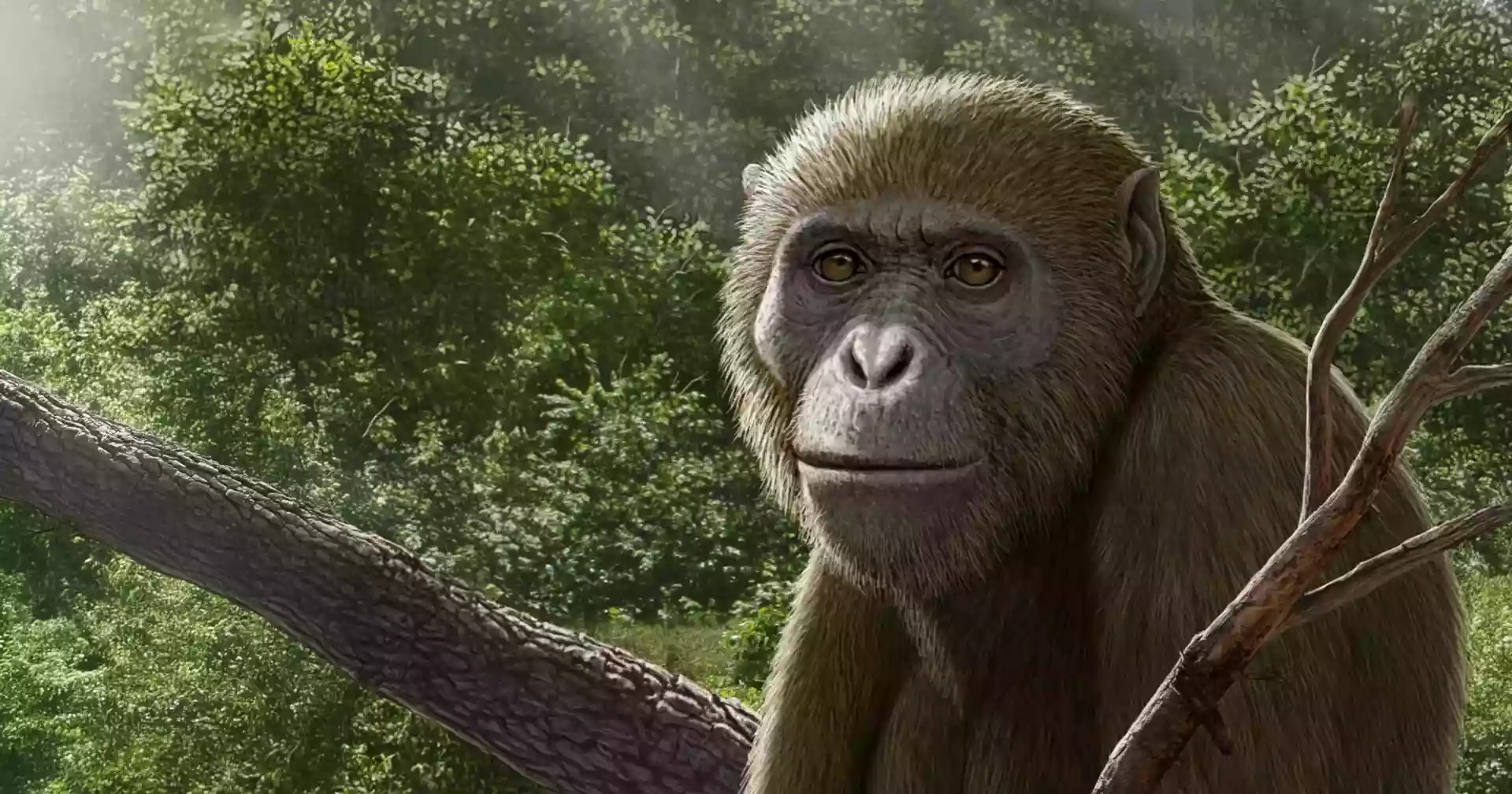
A newly discovered fossil from northern Egypt is reshaping scientists’ understanding of early ape evolution and the origins of modern humans. The find suggests that the closest ancestors of today’s apes may have lived in northern Africa, not East Africa as previously believed.
The fossil, dating back around 17–18 million years, belongs to a newly identified species named ‘Masripithecus moghraensis’. Experts say it represents the closest known relative to the lineage that eventually led to all living apes, including humans. Researchers David Alba and Júlia Arias-Martorell note that the discovery “confirms paleontologists may have been looking for early hominoid ancestors in the wrong region.”
Most scientists agree that the first apes appeared in Afro-Arabia more than 25 million years ago and later spread into Eurasia between 14 and 16 million years ago. However, the exact origin of modern apes has remained unclear because fossils from this period are rare and scattered. Large parts of Africa remain unexplored, limiting researchers’ understanding of early ape diversity.
The fossil, unearthed in the Wadi Moghra area, offers new insights into ape diversity during a critical period when Afro-Arabia was becoming connected to Eurasia, allowing species to migrate beyond Africa. Using a Bayesian “tip-dating” method, which combines fossil age with anatomical features, scientists confirmed that ‘Masripithecus’ was a stem hominoid closely related to the ancestors of modern apes.
The study suggests that modern apes may have originated in northern Afro-Arabia, the Levant, or the eastern Mediterranean, challenging long-held assumptions and highlighting gaps in knowledge about early ape and human evolution.
Source: Science Daily