
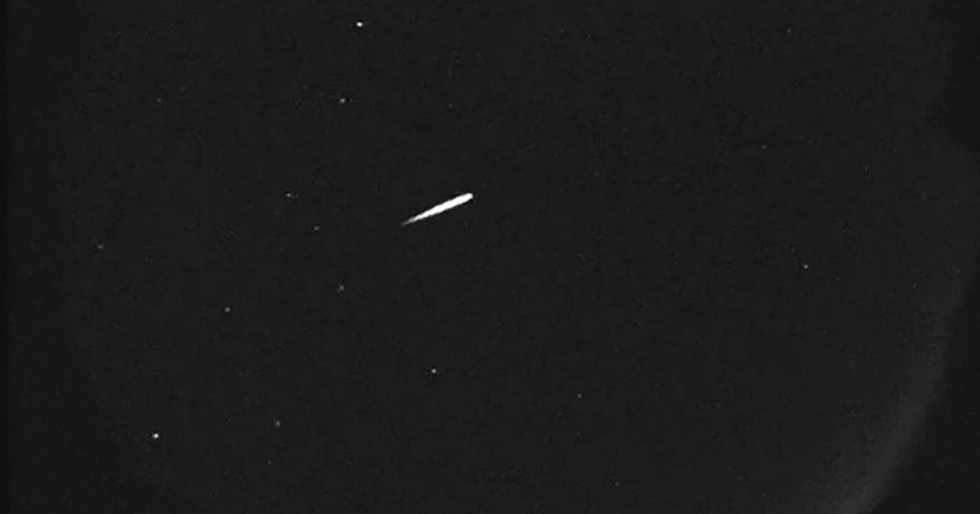
The Orionids, one of the two major meteor showers caused by debris from Halley’s comet, will peak alongside a new moon, offering stargazers an excellent opportunity to witness shooting stars without moonlight interference.
During the peak on Tuesday morning, observers can expect to see up to 20 meteors per hour under ideal conditions, said Thaddeus LaCoursiere, planetarium program coordinator at the Bell Museum in St. Paul, Minnesota. The viewing period will continue until November 7.
“Weather permitting, it will be a spectacular show,” LaCoursiere said.
Halley’s comet passes near Earth approximately every 75 years, leaving debris that gives rise to two major meteor showers each year. “Sometimes the Orionids leave bright, lingering streaks, called trains, in the sky,” he added.
What is a meteor shower?
As Earth orbits the Sun, it occasionally passes through debris left behind by comets or, in some cases, asteroids. The Orionids originate from Halley’s comet.
When these fast-moving space rocks enter Earth’s atmosphere, friction heats them, causing them to burn up. The surrounding air sometimes glows briefly, forming a fiery tail — the phenomenon known as a shooting star.
No special equipment is needed to enjoy these annual meteor showers. Simply find a dark spot away from city lights.
Tips for viewing a meteor shower
The best time to observe a meteor shower is usually after midnight or during the early pre-dawn hours when moonlight interference is minimal. Bright moonlight and artificial lighting are the main obstacles to clear viewing. Cloudless nights and a waning moon provide optimal conditions.
Observers should keep their eyes on the sky rather than checking their phones, as this allows better adaptation to the darkness and increases the chances of spotting shooting stars.
Upcoming meteor shower
The next major meteor shower, the Southern Taurids, is expected to peak early on November 5, coinciding with a full moon.
Source: AP