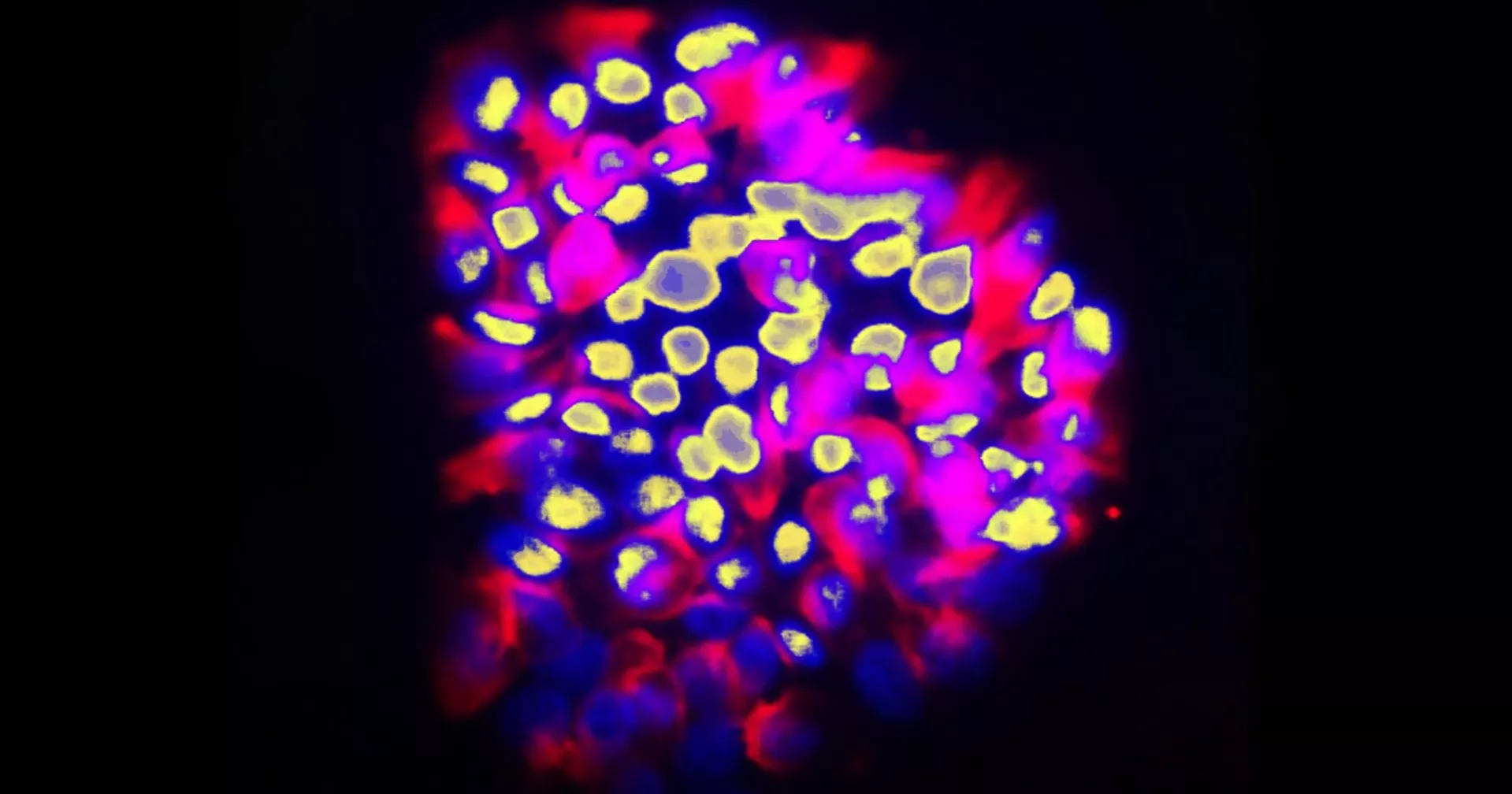
A newly developed artificial intelligence tool can forecast which cancers are likely to spread, offering hope for earlier and more effective intervention.
Scientists have long sought to understand why some tumors metastasize while others remain confined. Researchers at the University of Geneva (UNIGE) examined colon cancer cells and identified key factors influencing a tumor’s likelihood to spread, along with specific gene expression patterns that help estimate that risk.
Using these findings, the team created an AI system named Mangrove Gene Signatures (MangroveGS), which translates genetic signals into highly accurate predictions across different cancer types. The study, published in ‘Cell Reports’, could pave the way for more personalized treatments and the discovery of new therapeutic targets.
Cancer as a disrupted developmental process
Lead researcher Professor Ariel Ruiz i Altaba said cancer should be viewed not as random cell behavior but as a distorted form of biological development. Genetic and epigenetic changes can reactivate dormant programs from early development stages, contributing to tumor growth.
He noted that cancer follows structured biological patterns, and understanding these rules is key to identifying which cells may detach and form metastases elsewhere in the body.
Tracking how cancer spreads
Metastasis is responsible for most cancer-related deaths, particularly in colon, breast and lung cancers. By the time cancer cells are found in the bloodstream or lymphatic system, the disease often has already begun spreading.
To better understand this process, researchers isolated and cloned tumor cells, studying them in laboratory conditions and in mouse models to observe their ability to migrate and form new tumors.
Gene patterns linked to metastasis
The team analyzed hundreds of genes across around 30 cell samples from two colon tumors. They discovered clear gene expression patterns closely tied to a cell’s ability to move and spread. The findings also showed that metastasis depends not just on individual cells, but on interactions within groups of cancer cells.
AI model improves prediction accuracy
These gene signatures were integrated into the MangroveGS system, which uses numerous genetic markers to enhance reliability and reduce the impact of individual variation.After training, the model predicted metastasis and recurrence in colon cancer with nearly 80 percent accuracy, outperforming existing approaches. The same genetic markers were also effective in assessing metastatic risk in other cancers, including stomach, lung and breast cancers.
Toward personalized treatment
MangroveGS can be applied directly to tumor samples collected in hospitals. By analyzing RNA from cancer cells, the system generates a metastasis risk score that can be securely shared with doctors and patients.
Researchers say the tool could help avoid unnecessary treatment for low-risk patients while ensuring closer monitoring and targeted care for those at higher risk. It may also improve clinical trial design by selecting appropriate participants and increasing the effectiveness of studies.
Source: Science Daily