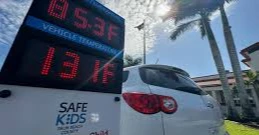
With a severe heat wave sweeping across the U.S. East Coast at the start of summer, child safety advocates are sounding alarms about the deadly risk of leaving children in overheated vehicles.
So far in 2025, nine children have died in hot cars in states including California, Florida, Louisiana, Maryland, New Mexico, New Jersey, and North Carolina, according to the nonprofit Kids and Car Safety. Five of those deaths occurred in June alone. In 2024, 39 similar deaths were reported nationwide.
How Heat Builds Dangerously Inside Vehicles
Even moderate outdoor temperatures can lead to life-threatening conditions inside vehicles. Kathy Wall, Director of Safe Kids Palm Beach County, warned that “a car’s interior can heat up by 20 degrees in just 20 minutes.” On an 80°F day — relatively mild by Florida standards — the inside of a car can exceed 100°F within minutes, she said.
While climate change is intensifying heat and extreme weather, hot car deaths can happen at any time of year. Since 1998, every U.S. state except Alaska has reported at least one hot car fatality. The years 2018 and 2019 both saw a record 53 deaths of children left in hot vehicles.
Research from meteorologist Jan Null of San Jose State University shows that 80% of the temperature increase in a vehicle occurs within the first 30 minutes — with interiors sometimes exceeding 150°F (65°C).
Children are especially vulnerable to heatstroke, said Capt. Karen Derogatis of Palm Beach County Fire Rescue. “They sweat less than adults and their body temperatures rise three to five times faster,” she explained.
Tragedy Can Strike Any Family
Experts stress that these incidents are not limited to specific social or economic backgrounds. “This has happened to doctors, teachers, child care workers — anyone can make this mistake,” Wall noted.
She said distraction is a key factor. In today’s fast-paced world, even a minor change in routine can lead to a devastating oversight. “A parent who doesn’t usually handle drop-off might simply forget their child is in the backseat,” she said.
Preventive Steps to Keep Kids Safe
Wall advised parents and caregivers to follow the "ACT" method:
A – Avoid leaving children alone in vehicles, even for a moment.
C – Create reminders. Place essential items like a purse, briefcase, or phone in the backseat to force a visual check.
T – Take action. “If you see a child left in a car, don’t wait — call 911 immediately,” she urged.
Some newer vehicles come equipped with technology that alerts drivers to check the backseat. But even without high-tech tools, safety habits can help. Capt. Derogatis encouraged drivers to make it second nature: “Just like checking your mirrors, get into the habit of glancing in the backseat every time you leave the car.”
As temperatures continue to soar, authorities are urging everyone to stay vigilant and prioritize safety — especially for the most vulnerable.