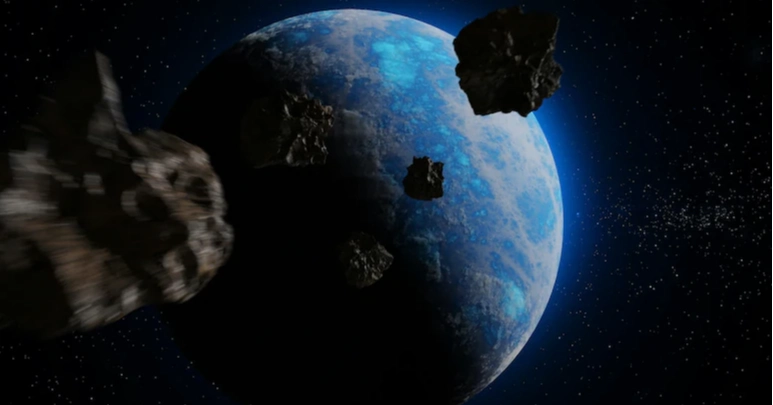
Asteroid mining, long popular in science fiction, is increasingly being examined by scientists as a potential source of valuable space-based resources, though major technical, economic and legal challenges remain.
A recent study assessed the feasibility, opportunities and obstacles associated with mining asteroids, noting that many of these space rocks contain significant quantities of metals such as platinum, gold and iron, as well as water that could be used as rocket fuel. Some asteroids are believed to hold minerals worth trillions of dollars.
The research focused on C-type, or carbon-rich, asteroids, which make up about 75 percent of known asteroids. The study, led by scientists from the Institute of Space Sciences (ICE-CSIC) and published in the Monthly Notices of the Royal Astronomical Society, suggests such bodies could become an important future source of raw materials.
Professor Jacinto Alonso-Azcarate of the University of Castilla-La Mancha analysed asteroid samples selected by the research team. The study’s lead author, astrophysicist Josep M. Trigo-Rodriguez of ICE-CSIC, said these meteorites provide crucial insights into the chemical makeup and evolutionary history of small, undifferentiated asteroids.
Researchers said years of experimental work helped them better understand how space conditions affect asteroid properties and mineral composition, calling the findings the result of sustained collaborative effort.
Despite the potential, scientists cautioned that asteroid mining faces steep barriers. The cost of reaching asteroids and extracting resources remains extremely high, and the required technologies are still underdeveloped. Processing materials in low-gravity environments and managing waste could also pose serious environmental and operational risks.
Trigo-Rodriguez noted that extracting water from water-rich carbonaceous asteroids may be more realistic in the near term, as it could support space exploration by serving as fuel or a basic resource for missions to other worlds.
In addition to technical and financial hurdles, regulatory uncertainty remains a major concern. The 1967 Outer Space Treaty bars nations from claiming ownership of celestial bodies, raising complex legal questions about commercial exploitation in space.
With inputs from NDTV