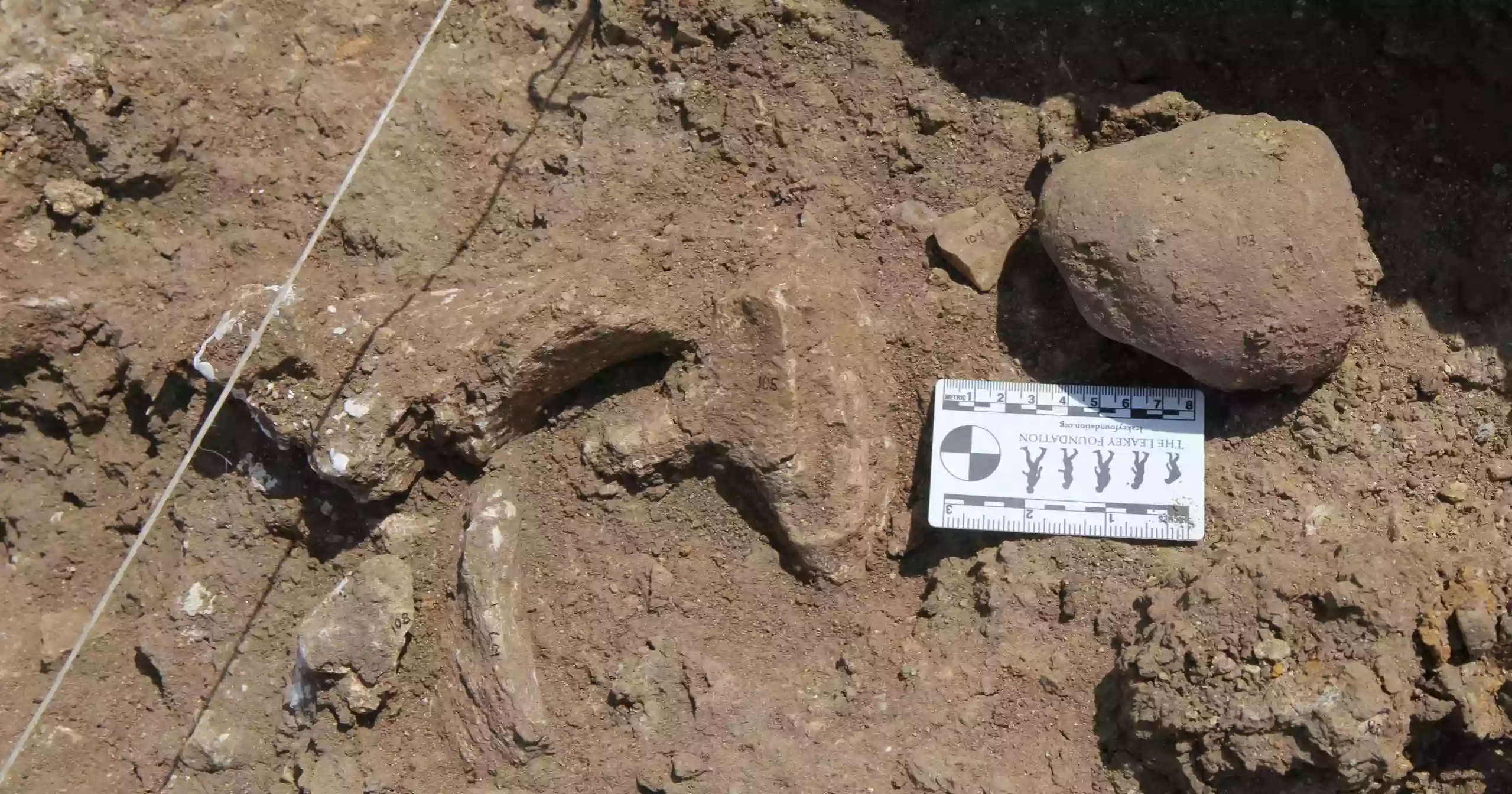
Early human ancestors during the Old Stone Age were more selective and strategic in choosing rocks for making tools than previously understood, according to a study published Friday.
Researchers found that these early people not only crafted tools but also had a mental map of where suitable raw materials could be found, traveling long distances to acquire them. By around 2.6 million years ago, they developed a method of pounding rocks to produce sharp flakes used as blades for butchering large animals like hippos near a freshwater spring at the Nyayanga archaeological site in Kenya.
“Hippo skin is really tough, and not all rocks could produce blades sharp enough,” said co-author Thomas Plummer, a paleoanthropologist at Queens College, CUNY. Emma Finestone of the Cleveland Museum of Natural History added, “Not every rock is equal in terms of the quality of tools.”
At Nyayanga, researchers discovered durable quartzite blades traced to streambeds and other sources about 8 miles (13 kilometers) away, suggesting early humans planned ahead and sought the best materials. Rick Potts of the Smithsonian’s Human Origins Program said this indicates a mental map of resource distribution across the landscape.
Scientists uncover ancient whale with Pokémon-like face and sharp teeth
Previously, it was thought stones were collected within a mile of the site. Eric Delson of the American Museum of Natural History, not involved in the study, said, “This is probably the earliest evidence of forward-thinking behavior in the archaeological record.”
It remains unclear which species made these tools — members of Homo or a related extinct genus such as Paranthropus. Homo sapiens emerged much later, around 300,000 years ago.
The research highlights that the practice of sourcing the best materials for tool-making, a hallmark of technology-dependent species like humans, dates back nearly 3 million years.
Source: Agency