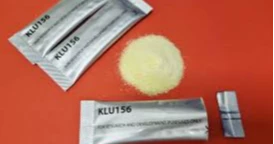
Scientists have unveiled two promising new malaria treatments as resistance to existing drugs continues to grow. One involves a next-generation medicine developed by Swiss drugmaker Novartis, while another relies on a single-dose combination of four widely available antimalarial drugs.
Novartis’ experimental drug, GanLum — a mix of a new compound, ganaplacide, and long-acting lumefantrine — showed a 97% cure rate in trials across 12 African countries, outperforming standard treatments and proving effective against drug-resistant malaria strains. The company expects to seek regulatory approval within 18 months.
Dundee and US surgeons perform world-first robotic stroke surgery
Meanwhile, researchers in Gabon found that a one-time four-drug regimen was nearly as effective as current three-day treatments, offering a simpler option for patients.
Experts warn, however, that emerging resistance and funding cuts could hinder future progress in the global fight against malaria.
Source: AP