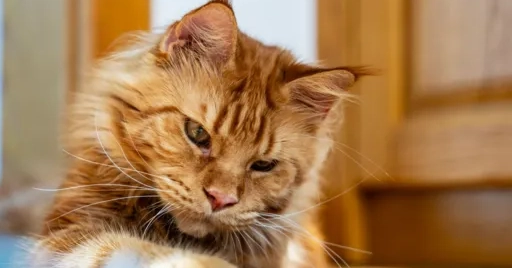
Famous feline characters like Garfield, Puss in Boots, and Toulouse from The Aristocats have something striking in common — their vibrant ginger fur.
Now, scientists from Japan and the United States have discovered the genetic reason behind this distinctive coloring, especially common in male cats.
Researchers from Kyushu University and Stanford University, in studies released simultaneously, found that ginger cats are missing a specific section of DNA in a gene called ARHGAP36.
This gene plays a crucial role in melanocytes — the cells that determine pigmentation in skin, fur, and eyes. The absence of this DNA segment leads to increased activity in ARHGAP36, which appears to trigger the production of lighter pigments, giving cats their iconic orange hue.
The findings are not only exciting for scientists but also for cat lovers who helped fund the study through crowdfunding. Beyond solving a long-standing mystery, researchers believe this genetic insight could eventually help determine whether orange cats are more prone to certain health issues.
It’s long been known that genetics influence a cat’s coat color, but pinpointing the exact location in the DNA was elusive until now. By comparing the DNA of cats with and without ginger fur, scientists identified the missing genetic material in ginger cats, revealing why their pigmentation differs.
One reason ginger cats are usually male lies in how the gene is inherited. The ARHGAP36 gene is located on the X chromosome.
Male cats have one X and one Y chromosome, so a single missing DNA piece on the X chromosome is enough to cause the ginger color. Female cats, with two X chromosomes, would need the same mutation on both chromosomes to be fully orange — making mixed coat patterns more common in females.
As Prof. Hiroyuki Sasaki from Kyushu University explains, in female cats, one of the two X chromosomes in each cell is randomly deactivated early in development. This leads to patches of fur with different active pigment genes, resulting in the typical orange-and-black calico patterns seen in many females.
This new understanding of feline genetics not only solves a colorful mystery but also highlights the complexity and beauty of how genes shape the animals we love.
Source: BBC