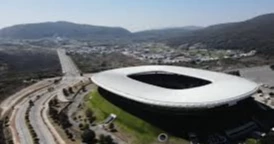
Hugo Alejandro Pérez was at his home, just a few miles from the stadium in Guadalajara set to host FIFA World Cup matches, when gunfire and explosions broke out nearby.
The 53-year-old restaurant owner had already questioned whether his city was prepared to stage such a major international event. Frustrated by unresolved local issues like unreliable water service and persistent cartel violence in the surrounding state of Jalisco, he said this week’s surge in bloodshed — triggered by the Mexican military’s killing of a top cartel leader — reinforced his doubts.
“I don’t think they should host the World Cup here,” Pérez said. “We have too many problems, and with all this violence, it’s not a good idea.”
His concerns surfaced as others also questioned Guadalajara’s readiness to serve as a host city for the tournament, which Mexico will co-host with the United States and Canada. Mexican officials, however, insist the event will proceed as planned.
President Claudia Sheinbaum said there are “every guarantee” that matches will be safely held in Jalisco, adding there is “no risk” to visiting fans.
Jalisco Governor Jesús Pablo Lemus said FIFA officials have no plans to relocate any of Mexico’s venues. Meanwhile, Portugal’s soccer federation said it was closely monitoring developments ahead of a scheduled friendly against Mexico in March at the renovated Estadio Azteca, which will host the tournament’s opening match on June 11.
Jalisco has long grappled with intense cartel violence, including the discovery of a suspected killing site at a ranch last year and a growing crisis of disappearances. The state is considered a stronghold of the Jalisco New Generation Cartel (CJNG), whose leader, Nemesio Oseguera Cervantes — known as “El Mencho” — was killed Sunday during a military operation.
The crackdown unleashed widespread violence that left at least 70 people dead. Armed groups torched vehicles to block roads and clashed with security forces across multiple states before authorities said the situation was brought under control.
The operation forms part of Mexico’s intensified campaign against organized crime, amid pressure from U.S. President Donald Trump to curb cartel activity. The White House confirmed providing intelligence assistance in the mission and praised Mexican forces for eliminating one of the most wanted figures in both countries.
Still, analysts warn that eliminating a cartel leader can sometimes spark further instability, as rival factions compete for control. Experts say uncertainty remains over whether CJNG has a clear successor, raising fears of internal conflict or territorial disputes with rival groups.
For residents like Pérez, the violence underscores lingering insecurity. When gunmen set a vehicle ablaze near his home during clashes Sunday, he sheltered neighbors inside as the firefight continued for an hour.
He remains unconvinced that the World Cup’s projected $3 billion economic boost — estimated by Mexico’s soccer federation — will benefit working-class communities like his, even those close to the stadium.
Despite the turmoil, Guadalajara appeared to regain a sense of normalcy Tuesday. Businesses reopened, traffic returned to the streets, and workers continued preparing the stadium. Security forces maintained a visible presence across the city.
Some residents urged calm, saying the unrest had been exaggerated, while others worried about the long-term impact on tourism.
Maria Dolores Aguirre, who runs a small shop in the mountain town of Tapalpa where the military operation took place, said she fears the violence could hurt local livelihoods.
“It’s going to affect us. The whole world saw what happened,” she said. “People are going to think twice before coming.”