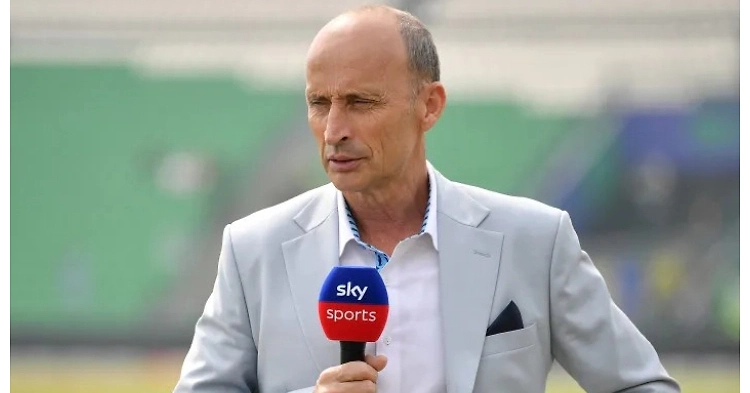
Former England captain Nasser Hussain has thrown his weight behind Bangladesh and Pakistan in the ongoing T20 World Cup crisis, asserting that it is high time to halt the intrusion of politics into the sport.
Speaking on the Sky Cricket Podcast with fellow commentator Mike Atherton, Hussain praised Dhaka’s refusal to bow to pressure and Islamabad’s solidarity move.
“I liked that Bangladesh stood firm on their decision. They stood up for their player Mustafizur. I liked Pakistan's stance as well,” Hussain said.
Tracing the crisis to its flashpoint, Hussain pinpointed the exclusion of Bangladeshi pacer Mustafizur Rahman from the IPL as the catalyst.
Center of World Cup storm Mustafizur lands PSL deal with Lahore
He noted that everything “snowballed” from the moment the BCCI allegedly directed Kolkata Knight Riders to remove Rahman from the squad due to the political climate.
Hussain views Pakistan’s subsequent boycott of the India match as a strategic financial strike.
With the India-Pakistan fixture reportedly generating more revenue than the rest of the tournament combined, Hussain argued this was the only leverage left.
“The only way to hit the ICC or even India is through the money and finance of the India-Pakistan match. It is the only way,” he observed.
The former captain also posed a sharp hypothetical regarding the ICC’s consistency. He questioned whether the governing body would be as “inflexible’ if the roles were reversed—specifically, if the Indian government barred its team from traveling a month before a tournament.
ICC, Google announce first-ever AI-powered T20 World Cup for 2026
“Would the ICC still... say—you know the rules, bad luck, we are dropping you?” Hussain asked, implying a double standard in how Bangladesh was treated compared to India.
He further lamented how politics has seeped into player behavior, describing recent incidents where players refused handshakes or declined trophies as “depressing”. Warning that constantly “cornering” nations like Bangladesh and Pakistan would degrade global cricket, he urged the ICC to treat all members equally, regardless of financial background.