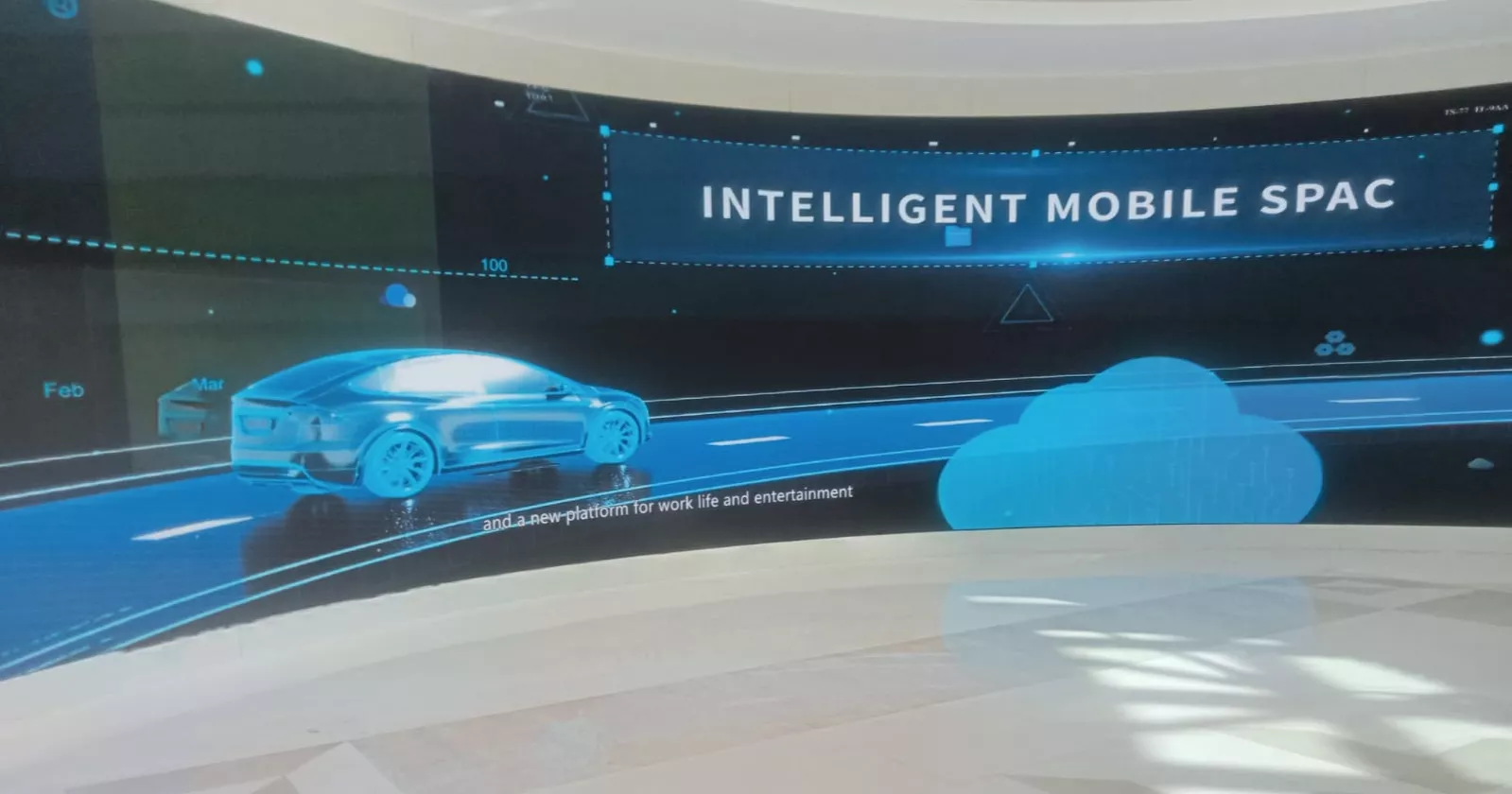
China’s first high-level automated driving demonstration zone, established in 2020, aims to advance the development of autonomous driving technology and intelligent connected vehicles, following China’s 'vehicle-road coordination' approach to automated driving.
The project is being developed in phases, with each stage building on the success of the last.
The demonstration zone’s development is structured into four distinct phases. Phase one focused on setting up the experimental environment, while phase two marked a small-scale deployment.
In phase three, large-scale deployment began and phase four focuses on expansion and scenario refinement.
After four years of development, the zone has now entered phase three, enabling autonomous shuttle driving services in key scenarios such as airports and museums.
One of the most significant milestones of this project is the establishment of a city-level engineering test platform that integrates five critical systems: vehicles, roads, cloud computing, networks, and mapping. This platform provides world-class infrastructure for automated driving companies, accelerating innovation within China's automotive industry.
To further promote innovation, the demonstration zone has implemented a range of policies designed to create a "friendly" environment for automated driving. These include peak-hour testing, cross-regional test recognition, and approval for unmanned delivery vehicles on public roads, among others. The zone has now demonstrated eight application scenarios: robot shuttles, unmanned delivery, unmanned retail, autonomous buses, unmanned sweepers, unmanned patrol vehicles, and automated freight trucks.
Currently, residents in the area can use mobile apps to book autonomous shuttle services, including transfers at Beijing Daxing International Airport. Unmanned sweepers have begun operating on city roads, and automated patrol vehicles assist public security in routine patrols. Meanwhile, automated freight trucks are being tested on highways in the Beijing-Tianjin-Hebei region.
While these automated driving vehicles are still in the testing phase and have not yet been officially put into operation, the demonstration zone’s innovations are a significant step forward in the development of China’s autonomous vehicle industry.