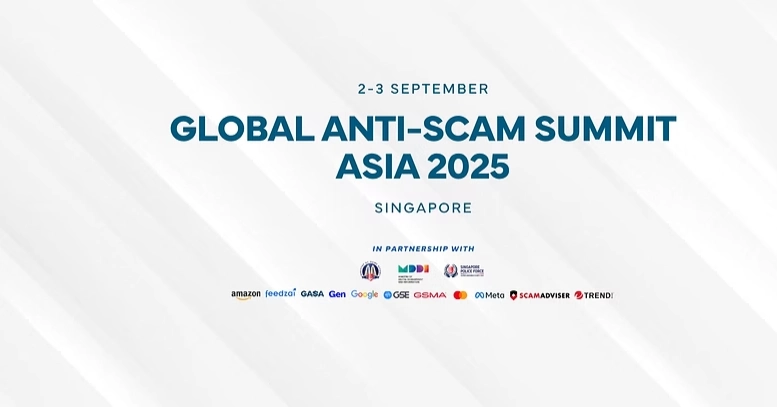
Amid the rise of coordinated scam networks across Southeast Asia, the Global Anti-Scam Alliance (GASA) is set to host the Global Anti-Scam Summit (GASS) Asia 2025 in Singapore on September 2–3, bringing together more than 1,200 leaders from over 60 countries in person and online.
“Scams are now systemic, cross-border threats,” said GASA Managing Director Jorij Abraham. “Our role is to connect the dots across sectors and borders, building the shared infrastructure needed to act faster and smarter.”
Over the past year, GASA has doubled its global membership, with the Singapore Chapter surpassing 100 members, including Amazon, Google, MasterCard, Meta, and Microsoft, alongside government and civil society partners. It has also launched new national chapters in the Philippines and Indonesia — two mobile-first economies facing high scam risks due to widespread digital finance use.
The Indonesia chapter, chaired by Indosat Ooredoo Hutchison’s Chief Legal & Regulatory Officer Reski Damayanti, aims to tackle phishing, SMS spoofing, and fake service alerts. In the Philippines, Globe Telecom executives Irish Salandanan-Almeida and Derick Ohmar Adil lead efforts to block malicious SMS and run awareness campaigns.
Energea launches stylish, travel-ready tech collection
“These chapters are strategic footholds in markets where digitalisation boosts living standards but scams threaten to undermine progress,” said Rajat Maheshwari, Chair of GASA Singapore Chapter.
A key initiative, the Global Signal Exchange (GSE), now aggregates over 370 million scam and fraud signals — up from 40 million at launch in January 2025 — with contributions from more than 35 organisations, including GASA, Google, GSMA, Meta, and Microsoft.
Summit highlights include a fireside chat with Senior Minister of State Tan Kiat How, the launch of the Southeast Asia Scam Report, INTERPOL and UN sessions on cybercrime and trafficking, and panel discussions on scam typologies, enforcement, and cross-border disruption.
Founded as a global non-profit, GASA works with governments, law enforcement, tech companies, and financial institutions to share intelligence, coordinate responses, and develop strategies to reduce the financial and emotional harm caused by scams.
Source: Agency