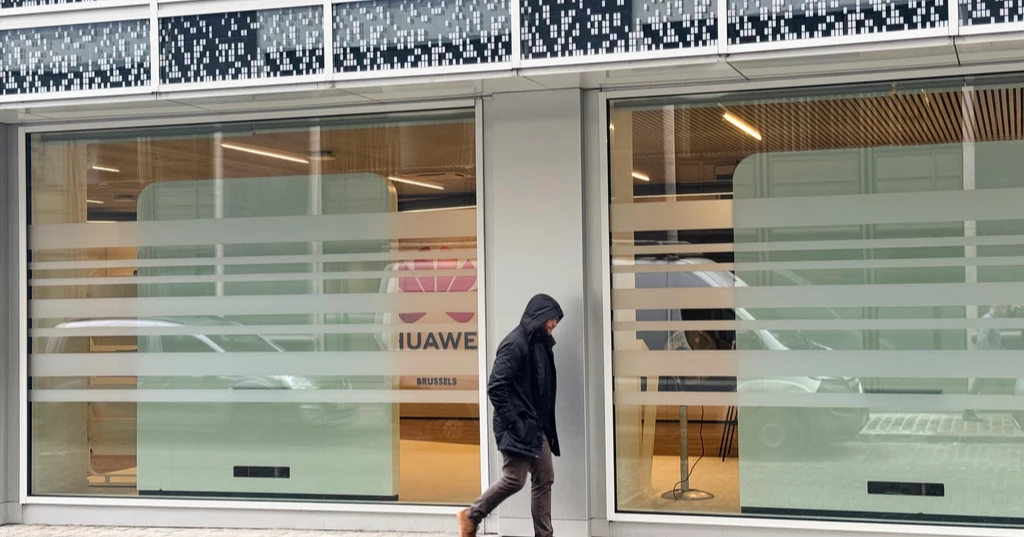
The European Parliament has prohibited Huawei lobbyists from entering its premises following the arrest of multiple individuals in a corruption probe linked to the Chinese telecom giant, marking another major scandal within the bloc’s legislature.
Belgian prosecutors suspect Huawei of bribing EU lawmakers.
On Friday, the European Parliament announced that it had suspended the access of Huawei lobbyists as a precautionary measure in accordance with its security regulations. The decision takes effect immediately.
The arrests on Thursday followed an investigation by Le Soir and other media outlets, which reported that lobbyists for Huawei were allegedly bribing current and former European Parliament members to advance the company’s business interests in the region.
Approximately 100 federal police officers conducted 21 searches across Brussels, as well as in the Flanders and Wallonia regions, and in Portugal. The investigating magistrate overseeing the case also ordered that offices allocated to two parliamentary assistants allegedly involved in the scheme be sealed within the EU Parliament.
Huawei stated on Thursday that it is taking the allegations seriously and intends to “urgently communicate” with investigators.
The Chinese company, a leading manufacturer of mobile phones and the largest supplier of networking equipment for telecommunications carriers, has been at the center of geopolitical tensions between the U.S. and China over technology and trade. Some European nations have joined the U.S. in banning Huawei’s equipment from next-generation mobile networks due to concerns that it could be used for Chinese espionage. Huawei has consistently denied these allegations.
According to the prosecutor’s office, the suspected corruption dates back to 2021.
This marks the second major corruption case involving the European Parliament in under three years. In December 2022, a separate scandal erupted when Qatari officials were accused of bribing EU representatives to downplay labor rights concerns ahead of the FIFA World Cup. The incident damaged the reputation of the EU’s only directly elected institution, which represents citizens from all 27 member states.