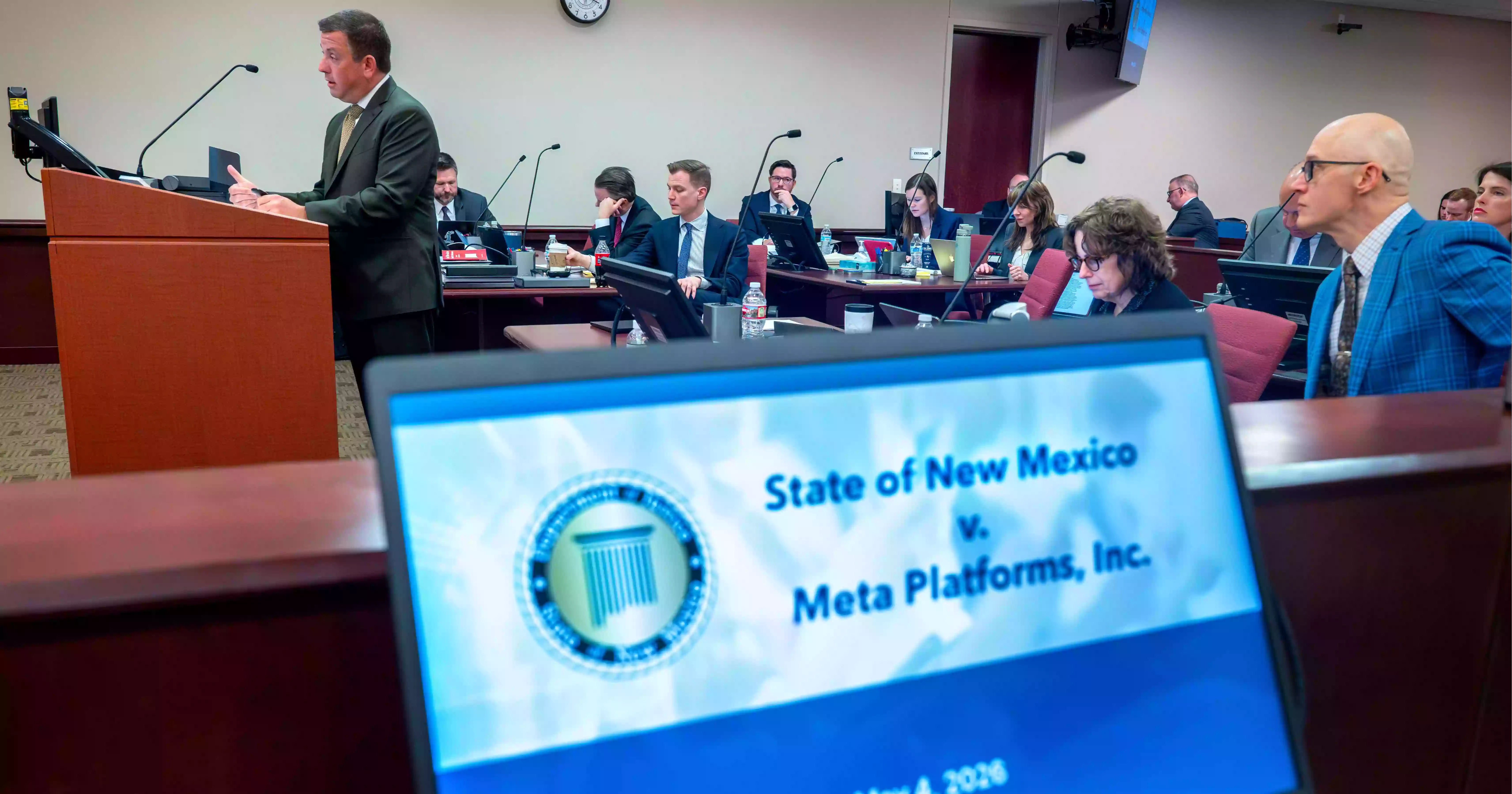
Prosecutors in New Mexico have called for sweeping changes to social media platforms owned by Meta as a landmark trial enters its second phase, focusing on child safety concerns linked to apps like Instagram, Facebook and WhatsApp.
Opening statements began Monday in a three-week bench trial to determine whether Meta’s platforms constitute a public nuisance. In the first phase, a jury imposed $375 million in civil penalties, finding the company knowingly harmed children’s mental health and failed to address child sexual exploitation risks.
State prosecutors are now urging the court to mandate fundamental reforms, including curbing addictive features, strengthening age verification systems and enhancing privacy settings to better protect minors.
New Mexico Attorney General Raúl Torrez said the earlier verdict challenged long-standing legal protections for tech firms under Section 230 of the US Communications Decency Act.
The state has proposed a $3.7 billion plan aimed at addressing the impact of social media on children’s mental health. Measures include redesigning content recommendation algorithms to reduce engagement-driven exposure, limiting features such as infinite scrolling and push notifications, and introducing safeguards against exploitation.
Prosecutors are also seeking requirements for parental oversight of child accounts and the appointment of a court-monitored safety supervisor to track compliance.
Meta has opposed the proposals, arguing they are impractical and infringe on free speech and parental rights. The company has warned it could withdraw services from New Mexico if compelled to implement what it describes as excessive regulations.
During the hearing, District Court Judge Bryan Biedscheid expressed caution about overstepping judicial authority, while legal experts noted that applying public nuisance laws to internet platforms remains largely untested.
Meta’s legal team also questioned the feasibility of implementing state-specific changes to its apps, calling such demands technologically unworkable.
The case is the first to go to trial among dozens filed by US states accusing Meta of contributing to a youth mental health crisis. Its outcome could have far-reaching implications for how social media platforms operate and are regulated across the country.