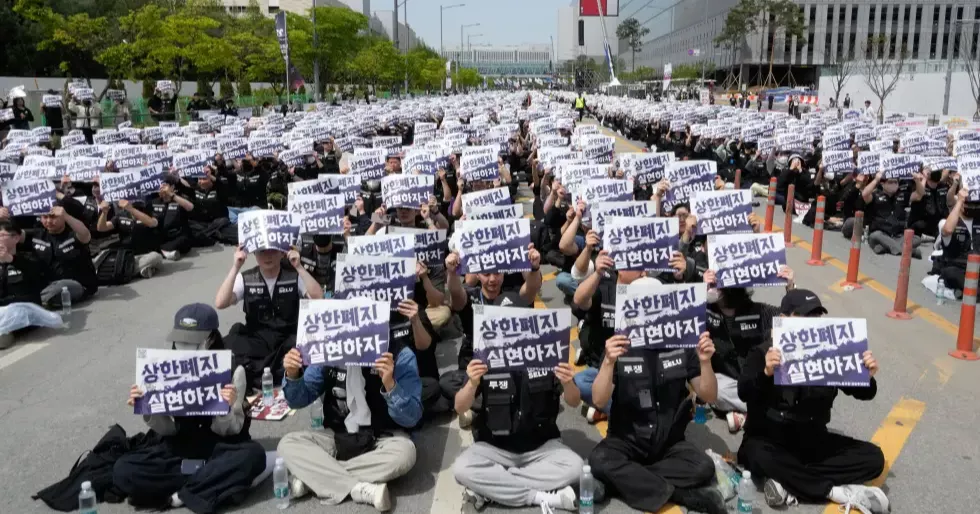
Samsung Electronics is facing the prospect of a strike after wage negotiations between management and union leaders broke down on Wednesday, raising concerns over possible disruptions to global semiconductor supplies and South Korea’s trade-driven economy.
The breakdown comes after the latest round of talks ended without agreement. Union leader Choi Seung-ho said workers would begin an 18-day strike from Thursday.
Both sides blamed each other for the failure to reach a deal. Choi accused management of rejecting a government-mediated proposal, while the company said the union’s demands for higher compensation were excessive, particularly for loss-making units.
Government officials have warned they may invoke rarely used emergency powers to force a settlement at Samsung Electronics, where the union represents about 74,000 workers. The union argues that the company has not provided fair compensation despite strong profits driven by the global artificial intelligence boom.
Samsung and its rival SK Hynix together produce about two-thirds of the world’s memory chips, a key component in AI-driven demand. Samsung recently reported an eightfold rise in operating profit for the January–March quarter to a record 57.2 trillion won ($38 billion).
Union leaders are demanding that Samsung allocate 15% of annual operating profits to employee bonuses and remove existing bonus caps, currently set at 50% of annual salaries. Management has rejected the proposal, citing the cyclical nature of the semiconductor industry.
Prime Minister Kim Min-seok has warned that a strike could cause up to 100 trillion won ($66 billion) in economic losses due to disruptions in highly complex chip production processes.
A local court earlier granted a partial injunction on the planned strike, requiring minimum staffing levels to protect facilities and ensure safe operations, while also restricting access to key offices and production areas.
Despite the deadlock, both sides said they remain open to further negotiations.