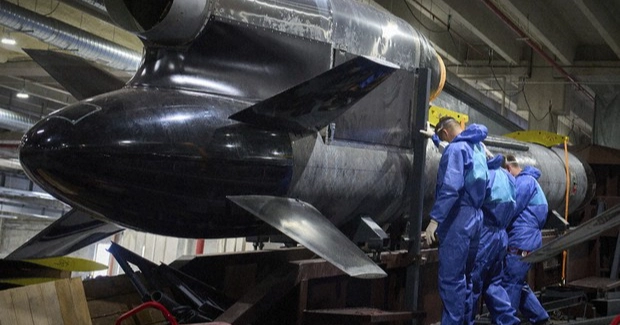
A Ukrainian-made drone attack on a Russian ammunition depot last September highlighted Kyiv’s ability to target deep behind enemy lines and underscored the rapid growth of its defense industry. The drones, manufactured by Fire Point, flew over 1,000 kilometers (620 miles), temporarily limiting Russia’s capacity for similar glide bomb attacks.
“Air power is our main asymmetric advantage,” said Iryna Terekh, head of production at Fire Point, noting Ukraine’s resource constraints compared to Russia. She oversaw production of the “deep-strike drones” used against ammunition depots, oil refineries, and other key Russian targets.
Spurred by necessity and limited Western military aid, Ukraine has emerged as a hub for defense innovation. Fire Point operates several covert factories producing FP-1 exploding drones that can travel up to 1,600 kilometers (994 miles). The company is also developing the FP-5 cruise missile, capable of reaching 3,000 kilometers (1,864 miles), with plans for mass production by year-end.
Ukraine now buys roughly $10 billion in domestically produced weapons annually, but officials say domestic industry could supply triple that amount, with European exports potentially boosting capacity further.
Founded by a group of friends with backgrounds in architecture, construction, and gaming, Fire Point initially sought to create cost-effective drones to match Iranian-made Shahed drones used by Russia. Starting with a production goal of 30 units per month in 2023, the company now produces about 100 drones daily at $55,000 each.
Delivery drones set to expand into more U.S. neighborhoods after sluggish rollout
The FP-1, with a 60-kilogram (132-pound) explosive payload, accounts for about 60% of Ukrainian strikes inside Russian territory, slowing advances along the 1,000-kilometer front in eastern Ukraine.
The conflict has also turned Ukraine into what defense entrepreneurs call the “Silicon Valley of defense,” with startups rapidly testing and adapting innovations on the battlefield. Fire Point, for example, developed its own software after Western navigation systems were disrupted by Russian electronic warfare.
Despite security risks, the company operates partially underground, with civilian areas providing cover. Drones are delivered to the front within 72 hours. The FP-5 missile, nicknamed Flamingo, delivers a 1,150-kilogram (2,535-pound) payload with high precision, and production is expected to scale from one to seven units per day by October.
Terekh said Ukraine continues to prepare for prolonged conflict, even as leaders seek diplomatic solutions. “We are preparing for a bigger, much scarier war,” she said.
Source: Agency