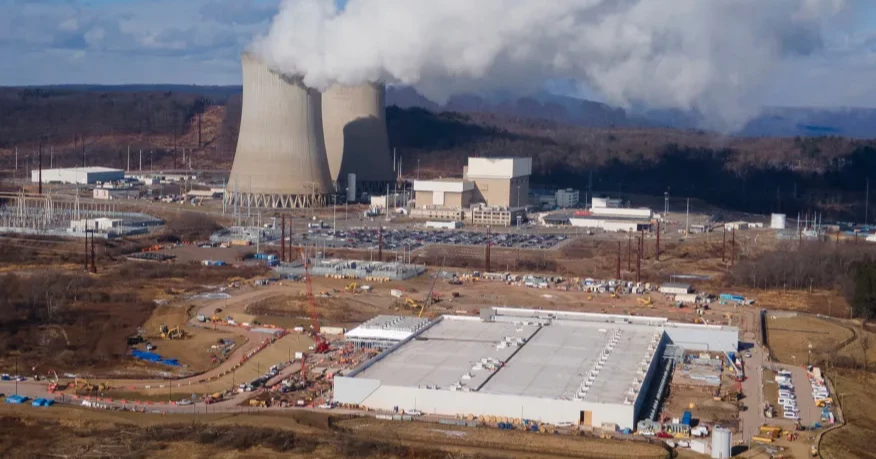
Building trades unions in the United States are emerging as key partners of major technology companies as the country rapidly expands its artificial intelligence infrastructure.
Union workers are playing a central role in constructing large data centres across the country, with demand for labour rising sharply. Many unions are now increasing training programmes and recruiting more apprentices to meet the growing need.
At the same time, unions have aligned themselves with tech firms and supportive government officials, often highlighting concerns that the US is in a strategic race with China to lead in AI development.
Their involvement has also made them a strong voice in local debates, where communities have raised concerns about data centres over issues such as energy use, water demand, rising utility costs and noise.
Union leaders have responded directly to such criticism, stressing the economic benefits these projects bring.
“These projects create thousands of construction jobs in local communities,” said Rob Bair, head of the Pennsylvania Building and Construction Trades Council. He added that instead of rejecting projects outright, communities should negotiate benefits such as improved project plans or funding for local services.
The boom in data centre construction is proving highly beneficial for unions. In some regions, these projects now account for a large share of work hours. Union officials say apprenticeship programmes are expanding rapidly and membership is reaching record levels.
North America’s Building Trades Unions reported record numbers of members and trainees in 2025, with growth driven by data centres, energy projects and government-backed investments in technology and infrastructure.
The surge in demand is also linked to the high energy needs of data centres, which has led to increased construction of power plants and related infrastructure.
Some unions that had struggled with declining work in recent years are now seeing renewed growth. For example, a union in Pennsylvania that had not recruited new apprentices for years is now training hundreds.
Technology companies say they also need more skilled workers and are investing heavily in training programmes, often in partnership with unions.
OpenAI CEO Sam Altman said earlier this year that union construction workers are helping build the foundation of the AI economy. Google also noted that much of the workforce on its data centre projects is unionised and highlighted its funding for electrician training programmes.
Union leaders acknowledge criticism over their close ties with large tech companies but argue that the projects would move forward regardless of their involvement.
“If unions step back, the data centres will still be built,” said Mark McManus of the United Association of Plumbers and Pipefitters. He added that his members are involved in a large share of such projects across the country.
Unions have also become active in political discussions around data centre development. They have supported projects and opposed stricter regulations in several states, including proposals to limit or delay construction.
In some cases, their position has created tension with environmental groups and progressive lawmakers seeking tighter controls.
At local meetings, union members have often voiced strong support for data centre projects, sometimes dominating discussions. In several cities, they have been among the few groups openly backing new developments.
Supporters argue that these projects bring jobs and economic growth, while critics continue to raise concerns about environmental impact and community costs.