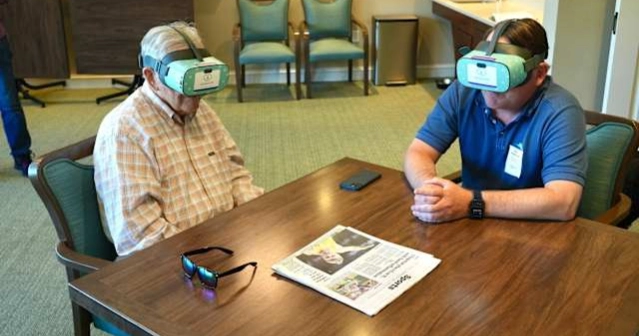
Virtual reality (VR) is giving older adults new ways to explore the world and strengthen social bonds, even for those in their 80s and 90s who can no longer travel. At The Terraces retirement community in Los Gatos, California, residents don VR headsets to visit far-off places, dive with dolphins, or soar in hot-air balloons — all while sitting side by side.
Rendever, the company behind the VR programs, curates experiences that revive memories of residents’ childhood neighborhoods, favorite destinations, and past adventures. Beyond entertainment, the technology fosters social interaction, often sparking conversations that extend into meals and other activities.
Studies suggest VR can help maintain cognitive function, reduce social isolation, and potentially slow dementia’s effects. Experts caution it should complement, not replace, traditional activities.
“Older adults are willing to adapt to meaningful technologies,” said researcher Pallabi Bhowmick. Rendever CEO Kyle Rand noted that shared VR experiences can create connections among residents who previously did not know each other well. Competing companies, such as Mynd Immersive, are also introducing VR to senior communities, highlighting a growing market that combines innovation with social and emotional benefits for the elderly.