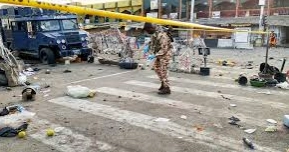
Suspected suicide bombers carried out coordinated attacks in Maiduguri on Monday night, killing at least 23 people and injuring more than 100, police said Tuesday. The incident is considered one of the deadliest in the city in recent years.
Residents and emergency responders reported three nearly simultaneous explosions in crowded locations, including a major market and the entrance of the University of Maiduguri Teaching Hospital.
Borno police spokesperson Nahum Kenneth Daso confirmed that 23 people were killed and 108 others were injured, attributing the attacks to suspected suicide bombers.
No group has claimed responsibility so far, but suspicion has fallen on Boko Haram, which has led an insurgency in northeastern Nigeria since 2009 in an attempt to impose a strict interpretation of Islamic law.
Over time, the group has grown stronger and split into factions, including the Islamic State West Africa Province, which is linked to the Islamic State.
Although Maiduguri has long been a center of militant violence, it has seen relative calm in recent years, even as attacks continue in surrounding rural areas.
The bombings occurred less than 24 hours after Nigerian forces repelled militant attacks on the outskirts of the city. Some residents believe the earlier assault may have been intended as a diversion.
By Tuesday morning, security had been tightened across affected areas and major roads, while many public places remained closed due to fear.
Police said investigations are ongoing to determine the circumstances of the attacks and bring those responsible to justice.
Explosions struck crowded areas within minutes
The first blast occurred around 7:30 p.m. at the hospital entrance. Minutes later, two more explosions hit the busy Monday Market and a nearby commercial hub near the post office, about 4 kilometers away.
Witnesses described scenes of panic and confusion, as security forces and emergency responders rushed to assist victims.
Volunteer security member Mohammed Hassan said the attack was among the deadliest in years and highlighted an urgent need for blood donations.
In recent weeks, militant groups have intensified attacks on Nigerian military bases, killing several officers and soldiers and seizing weapons and ammunition.
Analysts say the coordinated attacks represent a significant development for insurgents, striking a city often viewed as relatively secure.
Security researcher Malik Samuel said an attack on Maiduguri carries symbolic importance, showing that no place is beyond the reach of militant groups.