
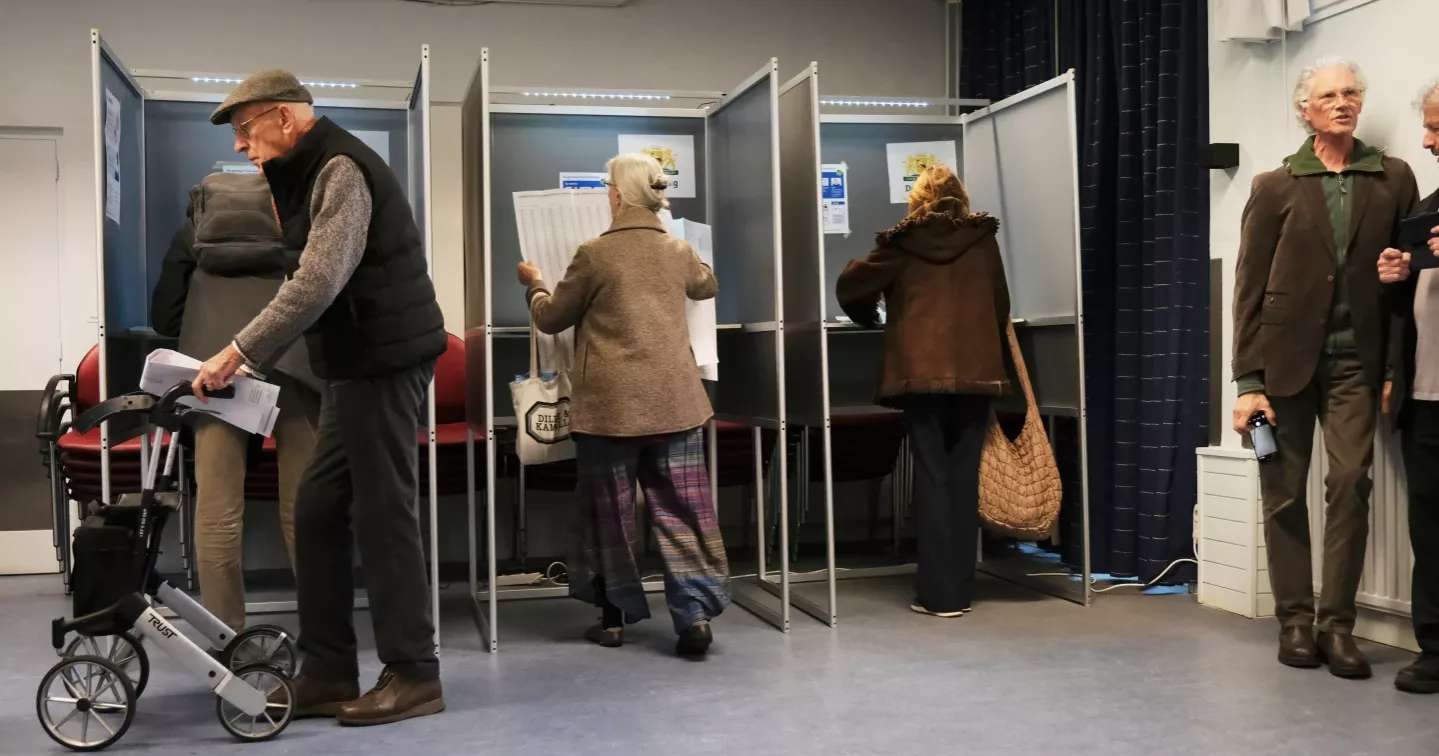
Dutch voters faced an unusually crowded ballot Wednesday as 27 parties and 1,166 candidates vied for 150 seats in the House of Representatives.
The long ballot paper, listing all parties and their candidates, posed a challenge for voters who mark their choices with small red pencils before folding the sheets to fit through the slot of the ballot box. Vote counters later must unfold the papers to tally results.
Five municipalities are experimenting with smaller, streamlined ballots this year, displaying party names and numbers separately from candidate details inside polling booths. Voters expressed mixed reactions. Marcel Roelofsen called a smaller ballot “ideal,” while Layla Balounsi said she had to look carefully to avoid mistakes.
The large ballot highlights the fragmentation of Dutch politics, though such crowded elections are not new. In 1986, 27 parties were also on the ballot, with three major parties – Christian Democrats, Labor Party, and People’s Party for Freedom and Democracy – dominating.
Polls suggest a close contest this year. The far-right Party for Freedom, led by Geert Wilders, appears poised for a second successive victory, while center-left and center-right parties remain competitive.
To qualify for the ballot, parties must pay a deposit of 11,250 euros ($13,077) and submit 580 supporting signatures. Votes are tallied to determine seat allocation, with one seat requiring roughly 69,551 votes in 2023. Small parties often win only a single seat, while some miss out entirely despite significant votes.
The large number of parties complicates coalition formation. The collapse of the last four-party coalition earlier this year left 15 parties in parliament, making the formation of a new government likely to take months.