
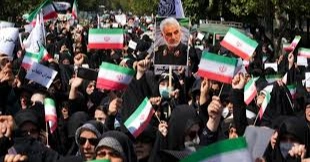
Activists said on Tuesday that at least 35 people have been killed in clashes linked to ongoing protests across Iran, with demonstrations continuing unabated.
According to the U.S.-based Human Rights Activists News Agency, more than 1,200 people have been arrested since the protests began over a week ago. The group reported that those killed include 29 demonstrators, four children, and two members of Iran’s security forces. Protests have spread to more than 250 locations across 27 of the country’s 31 provinces.
The organization, which gathers information through a network of activists inside Iran, has previously provided reliable data during periods of unrest.
Meanwhile, the semi-official Fars news agency, which is considered close to Iran’s Islamic Revolutionary Guard Corps, reported late Monday that around 250 police officers and 45 members of the volunteer Basij force were injured during the protests.
As the death toll continues to rise, concerns have emerged over possible U.S. involvement. On Friday, U.S. President Donald Trump warned that if Iranian authorities “violently kill peaceful protesters,” the United States would “come to their rescue.”
Although it remains uncertain whether or how Washington might act, Trump’s remarks prompted sharp reactions from Iranian officials, who threatened retaliation against U.S. troops stationed in the Middle East. The comments gained further attention after the U.S. military captured Venezuelan President Nicolás Maduro on Saturday, a key ally of Tehran.
These demonstrations mark the largest wave of protests in Iran since 2022, when nationwide unrest erupted following the death of 22-year-old Mahsa Amini while in police custody. However, the current protests have not yet reached the same level of intensity or scale as those sparked by Amini’s death, which followed her detention over alleged violations of Iran’s hijab rules.
Iran has experienced repeated nationwide protests in recent years. Economic pressure has intensified as sanctions tightened and the country struggled in the aftermath of a 12-day conflict with Israel. In December, the Iranian rial plunged to 1.4 million to the U.S. dollar, triggering fresh demonstrations shortly afterward.
Assessing the full extent of the current unrest has proven challenging. State media has offered limited coverage, while online videos provide only brief and unclear snapshots of crowds or gunfire. Journalists also face strict reporting restrictions, including travel permits and the risk of harassment or arrest.
Despite these challenges, the protests show little sign of ending, even after Supreme Leader Ayatollah Ali Khamenei warned on Saturday that “rioters must be put in their place.”