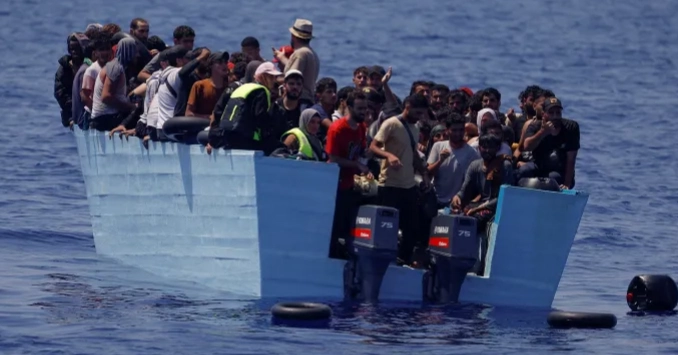
At least 60 migrants and refugees are feared dead following two separate shipwrecks off the coast of Libya, the International Organization for Migration (IOM) reported. The victims were attempting the dangerous journey across the Mediterranean Sea to reach Europe.
“With dozens of lives lost and families devastated, the IOM is renewing its call for increased international efforts in search and rescue operations, as well as the need for safe and structured disembarkation procedures,” said Othman Belbeisi, IOM’s regional director for the Middle East and North Africa.
One of the incidents occurred on June 12 near Alshab port in Libya's Tripolitania region. Only five people were rescued, while 21 remain missing. Among the presumed dead are six Eritreans—including three women and three children—five Pakistanis, four Egyptians, and two Sudanese men. The identities of four others remain unconfirmed.
The second tragedy took place on June 13, roughly 35 kilometers (22 miles) west of Tobruk. A lone survivor, rescued by local fishermen, reported that 39 others are missing.
So far in 2024, at least 743 people have died attempting to cross the Mediterranean to Europe, with 538 of those fatalities occurring along the Central Mediterranean route—the most perilous migration corridor in the world.
The European Union has in recent years stepped up efforts to curb irregular migration by supplying resources and funding to the Libyan coastguard. However, the force has come under scrutiny due to its links to armed militias and reports of widespread human rights abuses.
Humanitarian organizations argue that the decline in government-led search and rescue missions has made the Mediterranean crossing even more dangerous. They also criticize European governments for targeting NGOs that provide life-saving services at sea.
Many refugees and migrants fleeing war or persecution remain trapped in Libya, where they face dire conditions in detention centers. Human rights groups have condemned these facilities as inhumane and accuse authorities of systemic abuses ranging from extortion and forced labor to slavery.
Libya continues to struggle with instability and conflict following the 2011 NATO-backed ousting of former leader Muammar Gaddafi, creating an environment in which smugglers and traffickers operate with near impunity.
Source AL Jazeera