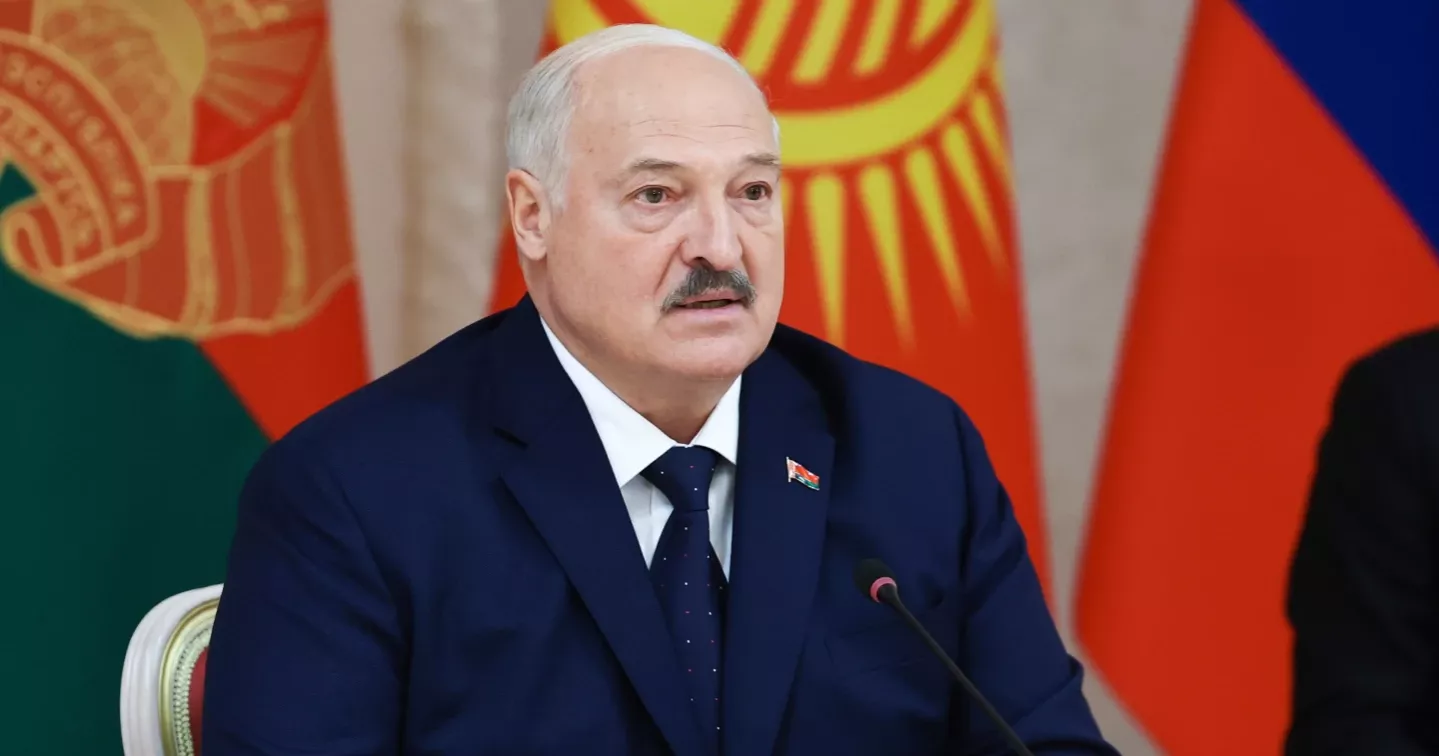
Belarusian President Alexander Lukashenko arrived in Myanmar on a goodwill visit, state media reported Friday, becoming only the second foreign leader to set foot in the country since the military seized power in 2021.
The trip comes weeks before a national election widely dismissed by critics as neither free nor fair. Lukashenko’s presence is seen by opponents of the junta as offering symbolic backing to the polls.
Belarus has emerged as one of the junta’s strongest supporters after the military takeover, alongside China and Russia. Senior Gen Min Aung Hlaing, who heads Myanmar’s military government, has visited Belarus twice this year. Both countries are seen internationally as authoritarian regimes.
Myanmar’s generals remain heavily sanctioned and isolated by Western nations for removing the elected government of Aung San Suu Kyi in February 2021 and for the widespread human rights abuses committed during the crackdown on anti-junta resistance.
The only other foreign leader to visit Myanmar since the coup was Cambodian Prime Minister Hun Sen in 2022, when he chaired the Association of Southeast Asian Nations.
According to the state-run Global New Light of Myanmar, Lukashenko landed Thursday night at Naypyitaw’s military airport, where Prime Minister Nyo Saw and other senior officials received him with full state honors, including cultural performances.
The report said Lukashenko is expected to meet Min Aung Hlaing for talks on expanding cooperation across multiple sectors. Both sides are set to sign agreements and memorandums of understanding during the visit.
During Min Aung Hlaing’s March trip to Belarus, Lukashenko pledged to support the upcoming election and said he would send observers to monitor it.
Rights groups and opposition forces have criticized the election as an attempt to legitimize military rule. Several armed resistance groups have vowed to disrupt the vote.
Justice For Myanmar, a rights organization that tracks the junta’s financial and military networks, said Belarus has supplied arms, equipment and training that strengthen Myanmar’s defense capabilities and its domestic weapons production. It said transfers have included air defense command systems, radar technology and ground-based missile systems.