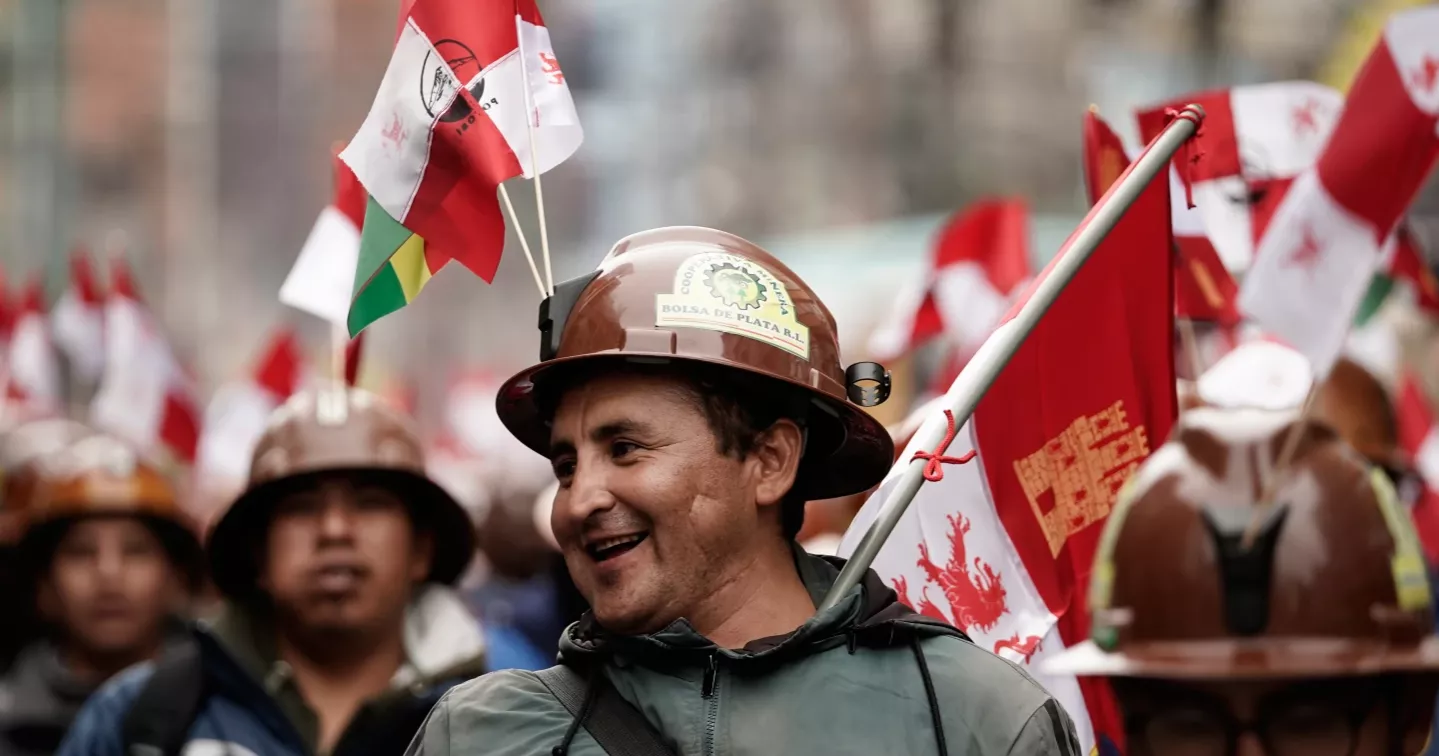
Bolivian miners and union-organised workers staged protests across the country on Monday against the government’s decision to scrap long-standing fuel subsidies, as a strike called by the Central Union of Workers began amid worsening economic pressures.
Miners marched through central La Paz while demonstrations were held in other cities, though several major trade groups, including transport workers, stayed away. Some union leaders said they accepted the subsidy removal, which they described as inevitable after nearly two decades.
President Rodrigo Paz, who took office on Nov 8, ended the fuel subsidy maintained by previous left-wing governments for more than 20 years. An emergency decree last week raised gasoline prices from about 53 cents per litre to roughly $1 per litre.
“The country is sick and must be healed,” Paz said during a televised town hall meeting on Sunday, adding that the subsidy was costing the state $10 million a day and benefiting fuel smugglers.
Business groups backed the move, saying it would help ease dollar shortages and allow firms to import goods and capital more easily. Imports of gasoline and diesel, costing up to $3 billion annually, have drained foreign currency reserves and deepened Bolivia’s worst economic crisis in four decades following the decline in natural gas exports.
Some unions traditionally aligned with left-wing leaders, including miners and coca growers, went on strike demanding the subsidy be restored. Police in La Paz blocked access to the central square housing government offices, while roadblocks were reported in six of Bolivia’s nine regions.
“We will continue this struggle until the decree eliminating the subsidy is repealed,” mining leader Andrés Paye said, accusing the government of favoring business interests over the poor.
Transport unions did not join the strike after the government agreed to allow duty-free imports of auto parts and mandated a 20 percent increase in the minimum wage.
Political analyst Carlos Cordero said the union-led protests were partly aimed at demonstrating strength ahead of next year’s local elections, but the limited turnout suggested weakening influence. “In many sectors, there is a conviction that the adjustment was necessary,” he said.