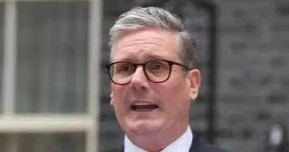
UK Prime Minister Keir Starmer is poised to announce the end of globalisation, marking a dramatic shift in Britain’s economic and political stance.
In a speech scheduled for Monday, Starmer will declare that the era of globalisation, which began following the fall of the Soviet Union in 1991, has not only faltered but has led to widespread disappointment among working-class voters.
His remarks come amid ongoing global trade uncertainties exacerbated by US President Donald Trump’s protectionist measures.
Trump and Netanyahu will meet again Monday on Gaza, tariffs and more
Trump’s unprecedented imposition of a 10 per cent “baseline” tariff on foreign goods has caused significant turbulence in global markets. These tariffs, part of his "America First" agenda, have fuelled concerns about the future of international trade and contributed to an atmosphere of economic uncertainty worldwide.
Starmer, who has long been critical of Trump’s isolationist policies, will acknowledge the US President’s focus on economic nationalism. However, while he does not endorse Trump’s extreme tactics, Starmer is expected to admit that a new era of economic relations is dawning—one in which protectionism and domestic production are becoming more central to national policies.
Trump urges Americans to ‘hang tough’ amid tariff turmoil
“Globalisation doesn’t work for a lot of working people. We don’t believe trade wars are the answer. This is a chance to show that there’s a different path,” Starmer is reported to say, according to The Times.
The Prime Minister’s address comes at a time when many countries are reconsidering their global trade strategies. Trump's aggressive stance on tariffs has led to a global recalibration, with rising tensions between nations creating an environment where some governments are turning inward. In light of this, Starmer is expected to call for reforms aimed at boosting domestic production and reducing reliance on international trade.
Supporting Starmer’s view, HSBC chief Sir Mark Tucker has recently suggested that globalisation may have reached its end. Speaking at the bank’s global investment summit in Hong Kong last month, Sir Tucker predicted that, in response to Trump’s trade policies, the world could break into smaller regional trade blocs. These smaller clusters could result in stronger trade ties within regions but reduced global connectivity.
In a related move, President Trump declared a national emergency on April 2, 2025, unveiling a series of retaliatory tariffs against countries that impose higher levies on US imports. The US will impose a 10 per cent baseline tariff on these nations, in an effort to push them to remove their own trade barriers. Trump’s bold announcement, which he hailed as a transformative moment in American history, signals his ongoing commitment to reshaping global trade in the interests of the United States.
“To all of the foreign presidents, prime ministers, kings, queens, ambassadors and everyone else who will soon be calling to ask for exemptions from these tariffs, I say, ‘Terminate your own tariffs, drop your barriers,’” Trump stated. “April 2, 2025, will forever be remembered as the day American industry was reborn, the day America’s destiny was reclaimed, and the day that we began to make America wealthy again.”
Despite the challenges posed by Trump’s policies, the UK has adopted what it calls a "pragmatic approach" to the situation. While the European Union has responded with retaliatory tariffs, the UK has faced a relatively mild 10 per cent baseline tariff, an outcome seen as a result of its more conciliatory stance towards Washington.
Starmer’s announcement, expected to resonate strongly with voters who have been sceptical of globalisation’s benefits, marks a crucial moment in Britain’s economic and political future. It signals the UK’s readiness to explore alternative approaches to economic growth, one that balances the demands of global trade with the needs of its domestic workforce.
As the world grapples with the consequences of Trump’s trade war and shifting global dynamics, it remains to be seen whether Starmer’s vision of a post-globalisation world will gain traction or whether it will face opposition from those who still believe in the benefits of an interconnected global economy.
Source: With inputs from international media